
“Science”, as I have often remarked before, is often not about enquiry, it’s about proving your point. When you hear a person declare “We are going to do a study to prove that…” you know that bias has already entered in, probably even at the stage when the experiment was being planned.
The correct position, of course, is “We are going to do a study to find out the truth about….” Then at least there is a chance for the facts to emerge!
Sometimes, in reverse, the bias is that “We are going to prove that the cause isn’t (whatever)…” or “We are going to establish once and for that there is no connection between [X] and [Y].”
So all of that careful stuff exists within my mind and it was there, in the back of my head, when I read of an interesting study looking at causes of food allergies. This, you may remember, is my long suit, my wheelhouse! I was not called the world’s “Number One Allergy Detective” for no reason (Sunday Mail 1991).
The headline that caught my eye was “US, Australia Lead the World on Kids’ Food Allergy Rates.” The research was certainly interesting.
In a nutshell (no pun intended):
• The global incidence of food allergy among children by age 6 at 4.7%.
• Risk factors included early antibiotic use, Black race, early allergic conditions, parental migration before birth, delayed solid food introduction, and family history.
• Findings supported the concept that food allergy development is multifactorial, the researchers said.
Some 4.7% of children have at least one food allergy by age 6 years, according to a meta-analysis that spelled out an extensive list of credible risk factors. I disagree with that fundamentally but you need to bear in mind they are ONLY thinking of antibody-antigen mechanisms, completely ignoring what Arthur Coca described as “non-reaginic familiar food allergy”.
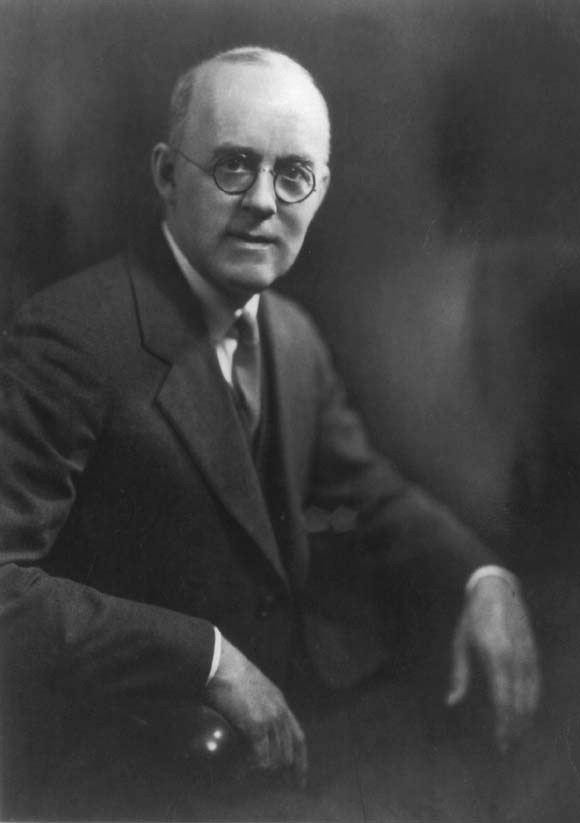
Arthur F. Coca (1875 – 1959), a top allergist-immunologist of his day, founder of The Journal of Immunology and was its editor from 1916 to 1948—so no lightweight—was well aware that food allergies sometimes run in families (without necessarily meaning it’s a genetic thing). But that very often there was no obvious chemical mechanism or pathway, like the antigen-antibody response.
The former is easily explained by the fact that meals tend to be identical in families, just by nature of habit: Moms, Grandmoms, Sisters and Aunties all tend to cook and eat the same way! It’s frequent exposure to foodstuffs that tends to build up this kind of food allergy or intolerance, so this is a very plausible mechanism for transfer. Hence “familial”.
Non-reaginic is a bit more technical but Coca was recognizing something I encountered daily: that without even recognizing WHY or HOW, it was demonstrable that certain foods would seriously upset an individual. There may be no obvious chemical mechanism; no reagents.
The rift grew to a gulf and now orthodox allergists deny there is any such phenomenon, a stupid view which leaves the poor patient without any effective help. He or she eats beef twice a week, gets migraines often and is told “It can’t be beef, you’re not allergic to beef.” It soon follows that the patient is therefore mistaken or making it up, then he or she must have a mental problem, a delusion that food gives him or her the migraines and then, next thing you know, “It’s all in your mind. I’m sending you to see a psychiatrist.”
[This is exactly what happened to me with a bitter public enemy of mine, who was an immunologist; he “tested” a patient for beef sensitivity by giving her a capsule of beef, double blind and when she didn’t react told her it was all nonsense. She needed psychiatric help. AND he tried unsuccessfully to get my license revoked or “struck off” as we say in Britain, because I subsequently helped her find out what was really wrong.]
Anyway, here goes with the recent published study, if you are still interested!
It was a meta-analysis which means they grouped a whole bunch of studies together
Across the 16 studies that confirmed allergy by direct food challenge, U.S. and Australian children appeared to face elevated risk, with incidence at 6.7% and 10.2%, respectively, Derek K. Chu, MD, PhD, of McMaster University in Hamilton, Ontario, and colleagues.
Risk factors associated with at least a doubling in risk or 5 percentage point greater risk included:
Early life antibiotic use, Black race, early onset of allergic conditions like atopic dermatitis or wheezing, elevated skin transdermal water loss, parental migration before birth, delayed introduction of solid foods, and family history of food allergy or related allergies.
Arthur Coca had picked up on the transdermal water loss, calling attention to a condition called hyperhydrosis, which means sweating excessively. The treatment of the day was to open the neck and sever the sympathetic nerve plexus, which is to wreck the autonomic nervous system. How unbelievably crude.
The value of the study is that it advances the concept that the development of food allergy is multifactorial rather than solely driven by eczema or timing of allergen introduction.
The “strongest and most certain factors” precipitating food allergies included prior allergic conditions:
• Eczema within the first year of life
• Allergic rhinitis
• Wheeze
• Severity of atopic dermatitis
• Increased skin transepidermal water loss
• Filaggrin gene sequence variations. Filaggrin is a skin protein and loss of competence is the cause of many allergic skins conditions, such as eczema.
Also important were oral allergen exposures. Delayed solid food introduction, such as peanut after age 12 months, was associated with more than double the odds of food allergy in childhood and a 6.8 percentage point risk difference.
Infant antibiotic use in the first month of life also strongly predicted food allergy development. In fact antibiotics anywhere in the first year or during gestation also predicted 32-39% higher relative risk.
Social and genetic risk factors did have an impact but relatively minor:
• Male sex
• Firstborn
• Family history of food allergy
• Parental migration (immigrant status)
• Black African descent
While cesarean delivery had a modest association with food allergy onset by age 6, associations weren’t significant for low birth weight, post-term birth, maternal diet, and stress during pregnancy.
And just to finish, Coca argued that hidden food allergies are the cause of almost every disease and disorder including heart attacks, asthma, constipation, diabetes, epilepsy, hypertension, indigestion, migraine and many others. Of course he was derided by colleagues but I know he was correct.
He also gave us the word atopy (atopic).
AND WHAT WAS THE MISSING QUESTION THEY DIDN’T ASK? Oh yes, I forgot that. Well, they did not look to see if vaccination is a trigger for developing food allergies, which it is. Or whether eating junk processed foods leads to food allergies, which it does!
They could have had the answer by asking me direct and saved a lot of money! Or Ted Randolph, Herbert Rinkel, Michael Zeller, William Rea, Jean Monro, Albert Rowe and a host of other pioneer doctors from the 50s, 60s and 70s.

The Official Alternative Doctor
SOURCE DOCUMENT:
https://jamanetwork.com/journals/jamapediatrics/fullarticle/2844828
The study was funded by the Canadian Institutes of Health Research (CIHR) and the American Academy of Allergy, Asthma & Immunology/American College of Allergy, Asthma & Immunology Joint Task Force on Allergy Practice Parameters.
Note that Dr. Chu disclosed no relevant relationships with industry. Co-authors disclosed a wide range of conflicts of interest. How wide?