
I was watching a TV program about my favorite corner of England: the much celebrated Lake District. I had a home there for the final years, before I met Vivien and we went to live abroad (now naturalized Americans, as you know).
The Lake District (aka. The Lakes or county Cumbria) is inspiringly beautiful, written about by poets and painted by numerous artists over the centuries. So imagine the widespread dismay when the UK government decided to site a nuclear power plant on the coast, just a few miles away! Originally Windscale, it is now called Sellafield.
 Little Langdale Valley, Lake District, UK
But it’s worse! In 1978 the government decided that Britain would accept nuclear waste from other countries for reprocessing at Sellafield. It’s beyond stupid. Not only endangering the British people, who they were sworn to serve, but setting Britain up for massive, almost insurmountable costs, which continue to increase every year.
Sellafield now has the dubious notoriety of being the most toxic and dangerous place on planet Earth! It justifies a massive (and costly) independent police force called the Civil Nuclear Constabulary (CNC), fully armed and trained, to protect the plant in case of the unthinkable: a terrorist attack.
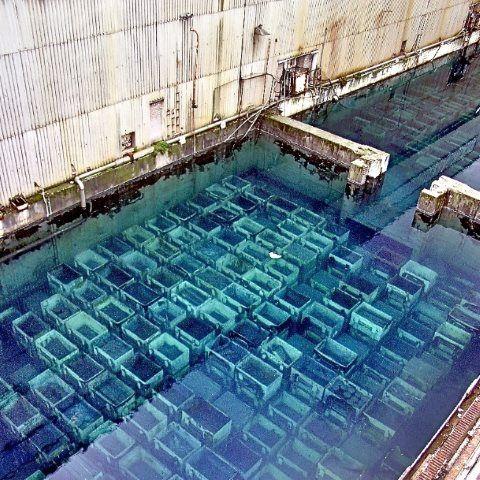
Highly radioactive waste in slowly corroding tanks at Sellafield. It will remain hazardous for 100,000 years!
Well, I could write a lot more about Sellafield but the point I want to make is that the young TV presenter was required to wear a “dosimeter” while he was shooting on site. Worn close to the heart, it tells how much gamma radiation he received on his visit to the plant. As a matter of fact doctors, nurses and radiologists also wear something similar, to measure their exposure to radiation (x-rays, MRI scans, etc.)
What Is A Toximeter?
The program set me thinking: why not a “toximeter” for us all to wear in our daily lives?
I imagine it would be difficult to create one but nothing is totally impossible (Elon, ya listening?) I assure you it would shock you to Hell and back. We are overwhelmed by what I have christened the “chemical blizzard” – urban atmospheric pollution, pesticides, solvents, PCBs, PFAs (polyfluoroalkyl substances) and other “forever chemicals”, detergents, cosmetics, flame retardants, dyes and preservatives… the list goes on and on.
But in addition, we have EMFs that have a profound biological effect, whatever governments and commercial interests claim to the contrary.
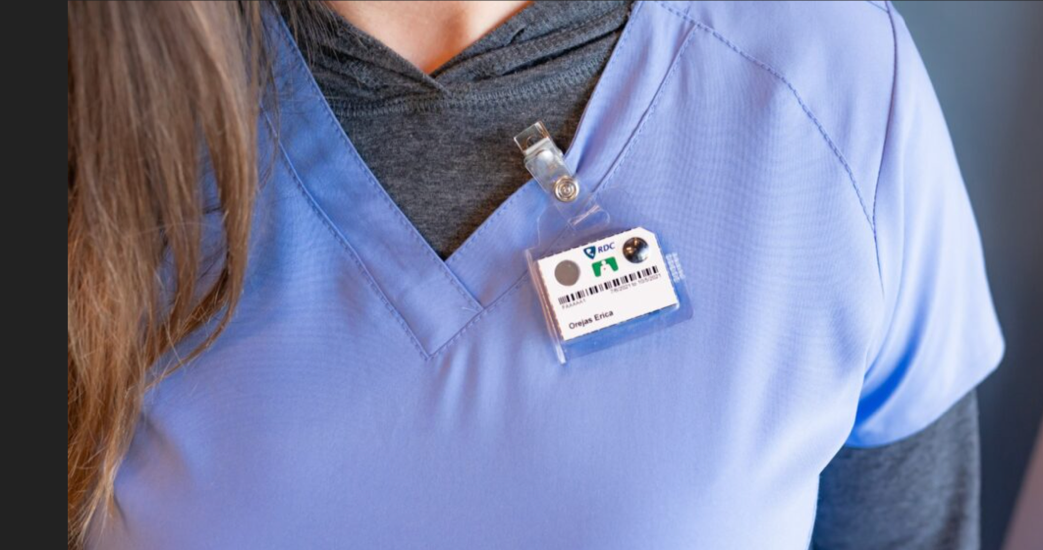 A typical dosimeter for radiation exposure. Could we develop a similar device for chemical and EMF exposures?
Wearing one of these chemical meters you would be driven crazy by the continuous alarm warnings!
Meanwhile, until we get such protection, is there anything we can do?
The master pioneer in this field was my old mentor Theron “Ted” Randolph who wrote one of the most important textbooks in medicine (totally ignored by all doctors): Human Ecology and Susceptibility to the Chemical Environment (1962)
He in turn influenced British psychiatrist Dr. Richard Mackarness, who wrote Chemical Victims (1980). Not only ignored but fought furiously by ignorant Pharma lackeys. Critics argued that his ideas “lacked sufficient scientific backing and were not widely accepted in the medical community.”
Just like anesthetics, antisepsis, handwashing and nutrition then! Not widely accepted by the medical community of the time. Haha!
It is surprising to most people to learn that indoor chemical pollution is often many times the allowed safety limits allowed at work. A 5-year-study carried out by the US Environmental Protection Agency (EPA) found that peak concentrations of 20 toxic compounds monitored were many times higher indoors than outdoors.
[https://www.upi.com/Archives/1988/11/10/EPA-study-Air-pollution-often-worse-indoors-than-outdoors/6028015559141/]
Various laws have been enacted to protect the work force. However, to pretend this system is working efficiently and protecting workers properly is to be foolish and gullible in the extreme. Only a very small percentage of workers—those employed in larger factories and offices—effectively come under this sort of umbrella. Although the laws supposedly cover all offices, factories and places of work, in actual fact it is impossible to monitor the countless small businesses that this represents. Only if the individual workers complain is any action likely to be taken in the event of a hazard and many workers are reluctant to report breaches of the codes for fear of losing their jobs, either as retribution or indirectly because the works are closed down due to not being able to afford all the safety procedures required.
What To Do
In 1986 I came up with what I called a “nose survey”. True, some chemicals are odorless. But not many. So I would have patient’s going through their home sniffing!
SCOTT-MUMBY’S RULE OF THE NOSE. if there is enough substance present to cause an odor, there is enough to cause symptoms.
Most chemical sensitive individuals have a very acute sense of smell; others have none and will need to enlist the help of someone else with a good “nose”!
Most of the chemicals we encounter are derived, ultimately, from petroleum and the whole group we call “hydrocarbons” from their chemical structure.
It makes good sense to clear your environment of as many of these unnecessary chemicals as possible. This will reduce your overall environmental burden. We choose the home for this because it is something you can control to a great extent. You can’t do much about what is at work or beyond your doors and windows (except move if you are down-wind from a factory or such) but, unless you have a particularly unsympathetic and selfish family, you should be able to effect enough changes indoors to produce a worthwhile improvement.
Some substances you will be able to replace with safer substitutes. Many you will be able to dispense with altogether. Some you will need and no substitutes can be found. The answer is to recognize the danger, use them as infrequently as possible, preferably get someone else to carry out the task involved and store these substances outside the house, for instance in the garage
I usually get patients to comb the whole house, room by room, cupboard by cupboard and shelf by shelf, listing all the chemicals found. Sometimes, the list itself is a shock and this is salutary. To pinpoint all potential trouble, I insist that what can be smelled is added to what can be seen.
As an interim measure, I would suggest that everything suspect list is put into a completely airtight plastic bag and sealed, then put outside the house, in a shed or the garage for instance.
Wait 2 – 3 weeks. If you feel better, the message is clear and I’m sure I don’t need me to tell you what to do from that point!
In my 1988 Allergy Handbook, I wrote:
This problem can be so bad that we have begun to pinpoint what is called the Sick Building or Tight Building Syndrome. Some modern buildings have such a high internal accumulation of these obnoxious substances, that almost everyone feels ill to some degree. Headaches, sore eyes and runny nose, fatigue and inability to concentrate are almost the norm. The effect on work efficiency is disastrous and absenteeism runs sky-high.
Since it is costing industry profits in lost man-hours, you may be sure (especially if you are cynical, like me) that a lot of money is now being spent on researching this problem.
In the meantime, the answer is simple. Open the windows! The problem is made far worse by the modem craze for energy efficiency. For chemical sensitives at least, draughts are good news. They help to circulate air and keep down internal pollution. This applies in the home also – double glazing and draught-proofing may be disastrous to those who suffer within the home environment.
The list below gives pointers towards chemical sensitivity in the work environment.
• Some places or rooms have a definite effect
• Potent odors (see “nose survey” above)
• The presence of any known hazards (eg. Toluene diisocyanate, formaldehyde, cellulose paints)
• You feel better at weekends
• Symptoms clear up on holidays
• Co-workers affected
• Reaction started when you started your present employment
• Worst on Monday and Tuesday, clears up as you grow accustomed later in the week
NB. Keep in mind potential physical factors eg. VDU’s and back or eye-strain (not necessarily an allergy)
Well, of course, environmental hazards is an enormous topic and would take a book to deal with, not just a newsletter. But awareness is the great accelerator and if you KNOW what’s out there, you can do your best to safeguard against it.
I wish you “a clean local environment”, which is something you can personally create. We have to leave it up to governments and industry cartels to solve the general society-wide problem. Just don’t hold your breath!
To your good health, Prof. Keith Scott-Mumby
The Official Alternative Doctor
A personal note on nuclear power: I think it’s the best idea we have for the future. No fossil fuels! The PROBLEM is:
• Cutting corners
• Skimping on safety (to create more profits)
• Lying and incompetence (overpaid idiots in charge)
• The insistence on secrecy and cover ups, whenever there is a problem
One might just add UNBELIEVABLE IDIOT STUPIDITY, such as bringing the world’s nuclear waste to a tiny island nation or siting a nuclear plant on a geological danger zone (Fukushima