

Influenza, commonly known as the flu, is a contagious respiratory illness caused by influenza viruses that infect the nose, throat, and sometimes the lungs. It can cause mild to severe illness and, at times, can be very severe and lead to death. If you’ve ever had real influenza, you would know. It is very debilitating. I had a bout back in the 1970s and I could barely move. My body didn’t seem to want to know me and wouldn’t listen to any “walk” signals!
Influenza-like illness (ILI), on the other hand, refers to a syndrome characterized by symptoms similar to those of influenza, such as fever, cough, and sore throat, but which may be caused by other pathogens.
In the United States, the Centers for Disease Control and Prevention (CDC) estimates that since 2010, influenza has resulted in millions of illnesses, hundreds of thousands of hospitalizations, and tens of thousands of deaths each year.
Be alert: these are “estimates” as it says, not based on facts or figures. It’s a game. If you are going to publish guesses, you can paint any scary scenario you like. Alert individuals would also note that flu statistics were suddenly not being collected or published in 2020 – 2022. They wanted to artificially boost the COVID deaths and so reported all flu as SARS-CoV-2 and suddenly there was “no flu”!
According to orthodox doctors, vaccination remains the primary preventive measure against influenza; however, they admit that challenges persist regarding its effectiveness and public acceptance.?
That’s because, contrary to all their propaganda, vaccination is very little use. Some years its “effectiveness” (questionable) is as low as 40%.
Couple the false claims with the fact they totally ignore natural preventatives, which can be formidable and even try to demonize them. Vaccination is NOT the only viable preventative. More of that later.
Background
Influenza viruses are a family, categorized into types A, B, C, and D, with types A and B responsible for the seasonal epidemics observed annually. Type A viruses are further divided into subtypes based on two proteins on their surface: hemagglutinin (H) and neuraminidase (N). So, for example, H5N1, which is bird flu.
The big problem with flu viruses is that they mutate constantly. What is prevalent at the start of the winter season may be gone by Christmas and a new strain emerges. So immunity cannot last very long.
And that’s the problem for flu vaccines: by the time they come to the market they are out of date and worthless. Only a steady symphony of false boasts (marketing lies) and credulous doctor enthusiasm keeps the myth going from year to year.
“Must get your shot this year,” is the constant chime. “Get your FREE flu shot here,” say the placards outside the pharmacy.
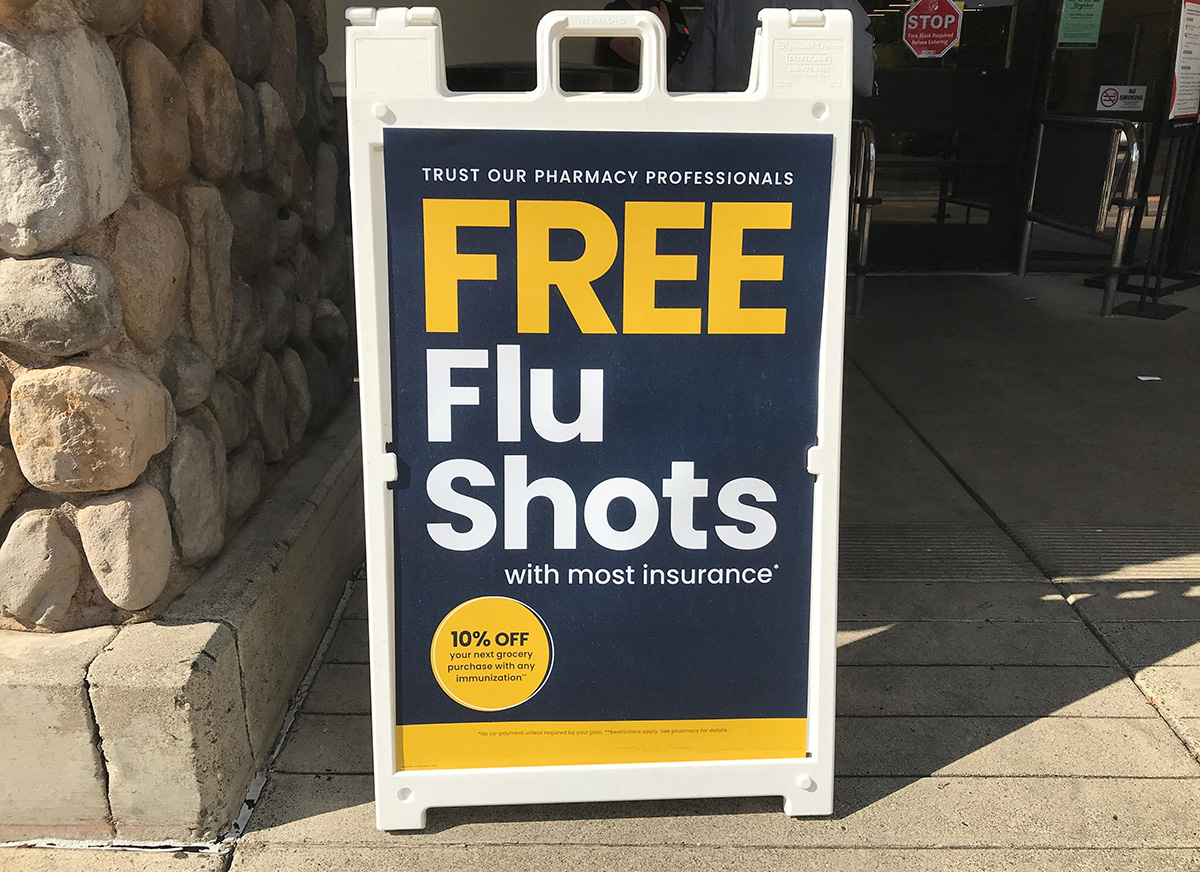
No doctor worth his degree would ever say “Don’t bother with the flu vaccine this year; it’s the wrong formulation.” It might be true but he or she would face heavy censure.
So annual vaccination remains the primary strategy for preventing influenza and its complications. To protect Big Pharma profits they always claim that even when the vaccine and circulating viruses are not closely matched, vaccination can still reduce the severity of illness and prevent hospitalizations and deaths.
But there is another failing: since flu vaccines are designed to protect against specific influenza viruses, they do not prevent illnesses caused by other pathogens that present with similar symptoms. This limitation means that even vaccinated individuals can experience ILI due to non-influenza viruses.
Historical events have also influenced public perception of flu vaccines. The 1976 swine flu vaccination campaign in the United States, for example, was associated with an increased incidence of Guillain-Barré Syndrome (a kind of paralysis), leading to heightened public concern about vaccine safety. However, the official line is that subsequent studies (read: hasty damage limitation) have shown that the risk of GBS following flu vaccination is very low, and the benefits of vaccination in preventing influenza complications outweigh this risk.
So Where Does This Leave Us?
According to my old pal from the UK, Dr. Damien Downing, a major review appeared in the journal Lancet Infectious Diseases1, in October (principal author Prof. Michael Osterholm, a respected researcher into infectious diseases). The paper, which found only 31 studies worthy of inclusion out of a massive 5,700 screened, concluded that there was only good evidence for moderate flu vaccine efficacy in healthy adults, and no real evidence of protection in those over 65 years, or for that matter in children. Of course it is the elderly, and particularly the frail elderly, that doctors are more concerned about – and in whom 90% of flu cases occur – and there was no evidence that flu vaccine prevents flu infection in this group.
Put another way, after nearly 6,000 studies of all sorts, there is no good evidence that flu vaccine prevents flu in its main target population.
The pooled effect in those healthy adults, aged 18 to 65, is reported as 57%, which means the vaccine roughly halves your chances of getting flu.
BUT: what is well known about placebo effects can account for most of that 57% effect. If you know you’ve had a shot for the flu you think you’re invincible. But since the chance of getting flu in that age group was less than 3% to begin with, that’s really only about a 1.5 percent reduction.
Then of course, this all happens at a price. Whatever you may have heard, there is no such thing as a medication without the risk of side-effects. In vaccines that risk can also come from the adjuvants. A vaccine is a small dose of an organism plus adjuvants – chemicals that are irritants to the immune system and trigger it to react to the organism part. Without adjuvants vaccines generally won’t work. Popular adjuvants include the antibiotic gentamicin (too much of which can make you deaf), aluminum compounds (which probably contribute to Alzheimer’s and other neurological diseases)2, and the mercury antiseptic, thiomersal/thimerosal (long known to be toxic and recently suspected in autism) – after all, they have to be toxic to work as adjuvants. Fluarix, one of the main brands of flu vaccine in the USA and UK, is stated by the manufacturers to contain both gentamicin and thimerosal.
We also used to think that flu vaccine prevented deaths from flu to a significant extent, even if it didn’t prevent overt infection – until we realized there was a major artifact at work. This is known as the healthy vaccine recipient effect, and the clue is in the name; a frail elderly person is much less likely to get down to their GP to have the vaccine than is a fit elderly person, who by the way is more likely to eat and live well, take vitamins and so on, and so has better resistance to viruses anyway.
What Osterholm and colleagues concluded, citing a couple of Californian studies, is that flu vaccine reduced all-cause mortality in those over 65 by a mere 4.6%. Is that worth the risk of adverse effects? That’s the choice you have to make but now you can make it knowing these facts.
Tamiflu
What about Tamiflu (oseltamivir), is that any good? It’s always being touted “officially”. They claim it reduces the duration of flu symptoms by 1 to 1½ days but it can give you other unpleasant symptoms, such as nausea and vomiting, and serious brain-fog (“I couldn’t think past a comma”), even according to the official website.3
But the reality is worse: basically, the whole planet is starting to become resistant to it.4 Why? Well Tamiflu is excreted largely unchanged in the urine of patients, and is barely affected by sewage treatment. So the active drug enters the waterways, as was shown during a flu outbreak in Japan, where ducks, the natural reservoir for the virus, can pick it up. And when this happens, the virus can probably (which means that so far it has happened in a lab experiment) develop resistance to Tamiflu.
So Tamiflu, which governments hand out so readily is rapidly becoming obsolete, because of resistance. This is just the same situation as overuse of antibiotics leading to seriously resistant hospital bugs like MRSA. But that took decades. Tamiflu has gone from, well maybe (I’d never take it), to it’s no longer any use in lightning fast time.
Save your money
As Dr. Damien, retorts: “It shows that we live on a small planet – and there’s nowhere left to hide our waste.”5
What’s Better?
Well frankly, anything that’s natural, overwhelmingly safe and yet effective is to be referred to synthetic, patented drugs with side effects of any kind.
Good ways to beat flu (and ILI) include:
Vitamin D. Take 20,000 IU to 50,000 IU, just for 3-4 days. It’s very cheap and harmless at such low intake. Add to that:
Vitamin C. Top up with about 20 – 25 grams but with a caution. You need to sip it constantly during the day. So much all at once would results in stomach pains and diarrhea and would not benefit blood levels.
Hydrogen peroxide. Get a nebulizer, 3% food grade hydrogen peroxide, and breathe in the mist, 3 to 5 times daily. If you can’t afford a nebulizer, then dilute the hydrogen peroxide to 1% (2 parts water to 1 part of the store-bought strength) and GARGLE (don’t swallow!) It’s almost as good, in fact 100% effective at preventing COVID in a busy hospital situation.6
Antibiotics are worthless against flu and viruses. But if the coughing and sneezing persists to the point where you have yellow-greenish sputum or snot, then might be a time to ask for antibiotics. That’s because colored mucus or slime like that means that opportunistic bacteria have invaded.

Final Tips.
I say this most winters: DO NOT BLOW YOUR NOSE. Increased pressure in the nasal passages caused when you blow your nose will send infected snot sideways into your sinuses and the resulting sinusitis could take days (even weeks) to clear.
Instead SNIFF. That pulls the muck backwards and you can swallow it (for convenience) or spit it out (better for you).
Recovery
A final tip from the masters of holistic science (which includes me) is that sneezing and cough are DETOX mechanisms, to expel unwanted pathogens. So if you seem to be recovering and then, suddenly, your nose starts streaming or sneezing ramps up and gets nasty, just remember that is a good thing! It’s the excretion phase! Wipe your nose a lot; just don’t blow it.
The ultimate principle, for those who are curious, is that healing takes place from the inside out!
Stay well (it’s simpler)!
 Prof. Keith Scott-Mumby
The Alternative Doctor
References:
- PMID: 22032844, http://www.ncbi.nlm.nih.gov/pubmed?term=22032844
- PMID: 21568886, http://www.ncbi.nlm.nih.gov/pubmed?term=21568886
- http://www.tamiflu.com/hcp/influenza-treatment.aspx
- http://uu.diva-portal.org/smash/record.jsf?pid=diva2:453789
- Orthomolecular Medicine News Service, January 14, 2012. Flu Vaccine: No Good Evidence, Damien Downing, M.D.
- Amoah GB, Quakyi IA, Sagoe KW, et al. (2021) Re: Oral antiseptics against coronavirus: in-vitro and clinical evidence. J Hosp Infect. 118:108-109. https://pubmed.ncbi.nlm.nih.gov/34487774


