
The interaction between calendar age and biological age is a fascinating story. I was measuring the difference almost 40 years ago. But science has advanced a great deal since those primitive days and now we can treat the topic of biological age with a great deal more certainty (and reverence, I might add).
Calendar age is the number stamped on your passport and defined by how many times the earth has gone round the sun since you were born. It’s what we normally mean when we refer to a person’s age.
But in terms of health, and especially longevity, we need to look at things slightly differently. Here we are concerned with how vibrant your organs and tissues are and how long they will last, starting from NOW! We call this “biological age.”
Say a person is sixty years old (calendar age) but has lived a healthy life, done all the right things and not “burned the candle at both ends”. Such a person’s body might be in roughly the same biological shape as the average fifty year-old. That would mean he or she has a biological “age” of fifty and is 10 years in credit for a long and healthy life. This individual might expect to live well past 80, maybe even 90 – 95 or more.
But another kind of sixty year-old individual who smokes, eats badly and doesn’t take nearly enough exercize might be in similar condition to someone healthy but 20 years older. Chances are her or she will die younger than the first individual, maybe a lot younger. Maybe very soon, in fact!
See it’s easy, really.
 Your calendar age is exact: you have a certificate, given when you were born, that tells us exactly how “old” you are. But how old you body “feels” and what sort of dynamic shape it’s in—actually more important—is not nearly so easy to establish.
It depends on what is happening within: are your organs doing the job as well a they should? Is some of you deteriorating, while other parts are not? See, that is important because if you are healthy in every way EXCEPT your heart is stressed, swollen and beating irregularly at times, then you might die quite soon, while MOST of the rest of you is in good shape.
Maybe everything is OK in the heart and blood vessels department but you start to lose your mental skills and grow a bit dotty over the years. That happens, but clearly the person is defined by the onset of dementia, not by heart health! He or she will be “old” before their time.
[It’s a tricky example because dementia is unlikely without considerable deterioration of the circulatory system, even if it’s undetected for a time. The blood brings nutrients and carries away toxins, so any under-performance of the circulatory system (properly called the cardio-vascular system) will have widespread aging consequences, but you get the idea].
Biological aging is intimate, cellular, and deeply personal. It unfolds not by birthdays but by biochemical conversations happening in your tissues, your mitochondria, your epigenome, your immune system, and—if we’re being honest—your nervous system’s relationship with meaning, stress, safety, and love.
To confuse the two is one of modern culture’s great conceptual errors.
Calendar age measures time elapsed since birth. That’s it. It does not care whether you slept, loved, healed, raged, starved, meditated, or laughed yourself senseless. It ticks forward with the same indifference whether you are flourishing or unraveling. Two people born on the same day share a calendar age but may inhabit bodies that differ by decades in functional capacity, resilience, inflammation, cognitive clarity, and regenerative potential.
Biological age, by contrast, asks a far more interesting question: How old is your body behaving?
It is an emergent property, not a single number. It arises from the cumulative state of cellular repair, metabolic flexibility, immune competence, hormonal signaling, mitochondrial efficiency, epigenetic regulation, and nervous system tone. It is shaped not just by genetics, but by environment, nutrition, trauma, beliefs, relationships, purpose, sleep, movement, toxins, and the stories the body has been forced to tell itself in order to survive.
Calendar age is destiny only if you believe in clocks more than cells.
At the biological level, aging is damage accumulating faster than repair. When repair keeps pace, aging slows, stalls, or even partially reverses. Yes, that is possible.
When damage overwhelms repair, biological aging accelerates—sometimes dramatically. This is why a person can “age” ten biological years in five calendar years under chronic stress, illness, or grief, and why another can appear to grow younger across a decade of conscious living.
See, cells do not own calendars. They respond to signals.
One of the most profound discoveries in modern biology is that aging is plastic. Not infinitely so, perhaps—but far more malleable than once believed. Telomeres shorten, yes, but their rate of shortening varies wildly. DNA accumulates mutations, but repair pathways can be upregulated or suppressed. Proteins misfold (which is bad), but chaperone systems can be strengthened. Mitochondria decline, but they also biogenically rebound under the right conditions. Epigenetic markers drift, but they can be re-patterned.
Biological age is not fixed at birth. It is negotiated daily.
Calendar age moves in a straight line. Biological age zigzags, stalls, accelerates, decelerates, and occasionally moonwalks backward when conditions allow. At 50 calendar years, one person may have the inflammatory profile, muscle mass, insulin sensitivity, and cognitive speed of a 35-year-old, while another carries the metabolic and immune burden of 70.
This divergence is not cosmetic. It predicts disease risk, recovery capacity, and mortality far more accurately than birthdate ever could.
What we call “aging” in everyday language is usually not aging at all—it is accumulated dysregulation. Systems falling out of coherence. Communication breakdowns between cells. Chronic low-grade inflammation smoldering like an unattended fire. Hormonal rhythms flattening. Repair cycles shortening. Autophagy (removal of dead cells and debris) slowing. Sleep architecture fragmenting. The nervous system remaining stuck in vigilance long after the danger has passed.
None of this is required by time itself.
Calendar age has no memory. Biological age remembers everything.
It remembers famine and abundance. It remembers safety and terror. It remembers loneliness, overwork, grief, unresolved shock. It remembers whether the organism felt supported or hunted by life. It remembers whether the body was treated as an ally or a machine to be driven until parts failed.
This is why two seventy-year-olds can walk into a room and feel like different species.
One carries stiffness, brittleness, and caution in every movement. The other carries fluidity, curiosity, and strength. One’s immune system is reactive and exhausted; the other’s is responsive and calm. One’s cells whisper inflammation; the other’s murmur repair. Calendar age cannot explain this. Biology can.
Modern medicine historically conflated age with inevitability. Decline was treated as natural rather than conditional. Wrinkles, sarcopenia, cognitive slowing, insulin resistance, osteopenia, immune senescence—these were framed as the unavoidable tax of time. “You’re growing old, what do you expect?”
But what we are now discovering is that many of these phenomena correlate far more strongly with biological age than with calendar age. Rather than the phenomenon of clocks ticking down, the real emphasis is systems wearing out under load.
There is also a crucial distinction between appearance and biology. Some people look young but are biologically old—propped up cosmetically while inflammation, metabolic dysfunction, and immune exhaustion quietly advance. Others look weathered but function with remarkable resilience. The grizzly old goat type of countenance. Skin is a visible organ, but it is not the whole story. Biological age lives in blood markers, tissue elasticity, mitochondrial output, cognitive flexibility, and recovery speed.
The Search For Markers Of Aging
The emerging science of aging biomarkers—epigenetic clocks, glycation levels, inflammatory indices, immune cell ratios—exists precisely because calendar age is such a blunt instrument. These tools attempt to quantify biological age, not because time matters less, but because time alone explains so little.
And here is where things get quietly radical.
If biological age is responsive to signals, then perception matters. Meaning matters. Belief matters. A nervous system that perceives life as hostile and difficult ages faster than one that perceives life as joyous and workable. A body trapped in perpetual defense spends its resources on survival, not regeneration. Over time, that trade-off becomes visible as “aging.”
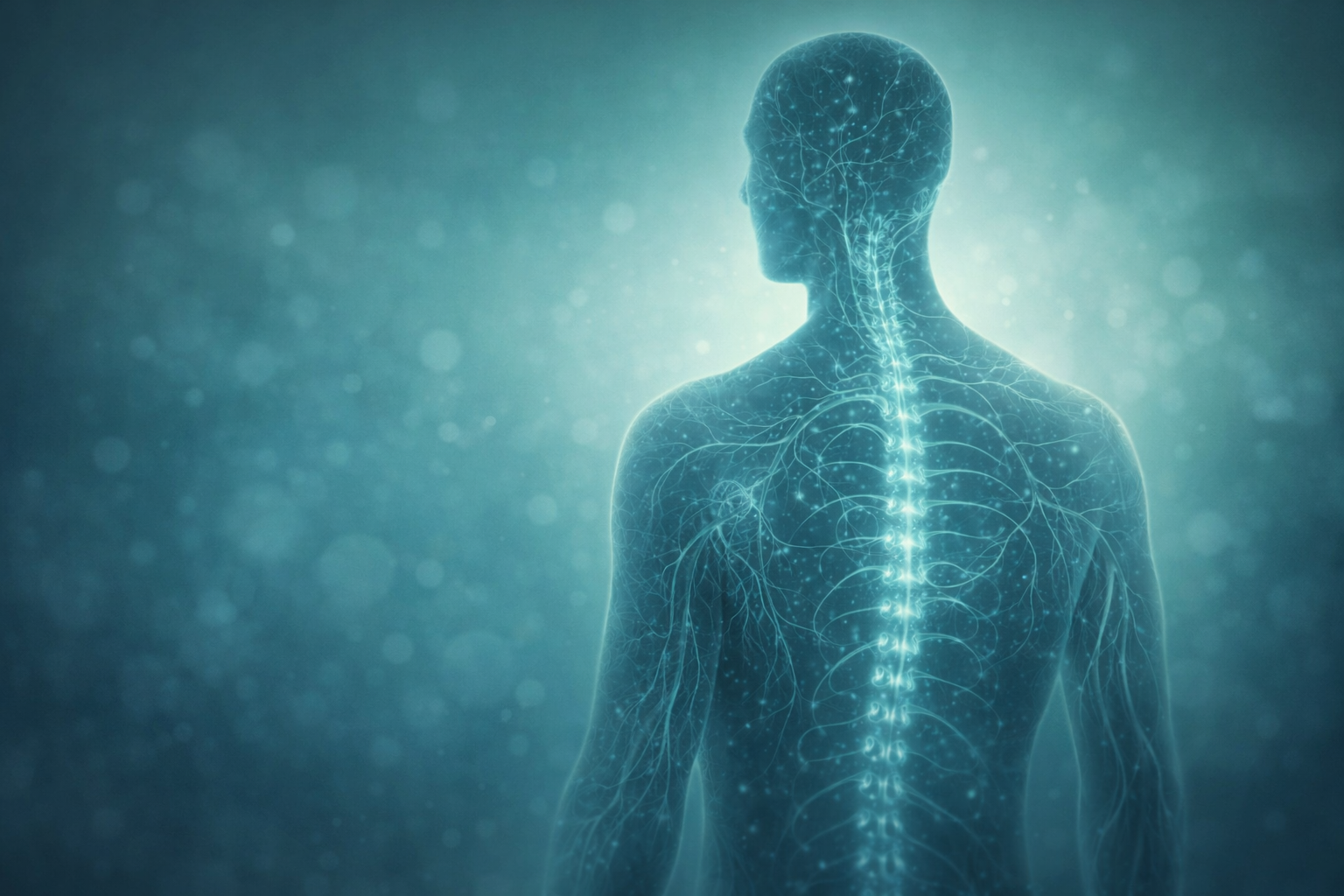
The immune system, endocrine system, and nervous system are in constant conversation. Fear ages. Safety heals. Purpose stabilizes. Joy lubricates repair. Loneliness corrodes at a cellular level. Chronic resentment is not just an emotion; it is a hormonal climate.
Put another way, calendar age does not care whether your life makes sense or not. Biological age very much does care!
Perhaps the most important implication of this distinction is ethical. When society treats calendar age as the primary metric of vitality, it enforces decline narratives prematurely. People are told they are “too old” to heal, adapt, learn, love, desire, or change. Biology does not agree. Cells are opportunistic. Give them the right signals and they respond—often astonishingly late into life.
We are not aging because we are getting older. We are aging because our systems are losing coherence.
Today that coherence can be restored to degrees once thought impossible.
This is not talking about immortality. It means flexibility. It means that aging is not a straight slide into the pit (entropy), but a dynamic negotiation between damage and repair, stress and recovery, meaning and exhaustion.
In the end, the difference between the two is the difference between counting years and telling a story. Calendar age is like a tax, a tally. Biological age is a narrative story written in cells—edited daily, revised constantly, responsive to how you live, what you eat, how you breathe, how you move, how you love, and whether your nervous system believes it is allowed to rest.
To Your Good Health, Prof. Keith Scott-Mumby
The Official Alternative Doctor