
When most people think about getting older, they think about wrinkles. Grey hair. A few extra pounds around the waist. Perhaps stiff joints or failing eyesight. But scientists are increasingly pointing to something quite different.
The real marker of ageing may not be your face at all. It may be your muscles.
That might sound surprising. We tend to think of muscles simply as the machinery that moves us about. They help us climb stairs, lift shopping bags and get out of a chair. Useful, certainly—but hardly exciting.
Yet this old view has been turned upside down.
Today, muscle is increasingly recognized as one of the body’s most important organs. In fact, many researchers now describe skeletal muscle as an endocrine organ—a tissue that manufactures and releases hundreds of powerful messenger molecules known as myokines. These tiny chemical signals travel throughout the body, influencing inflammation, blood sugar control, immunity, bone strength, heart health and even the function of the brain.
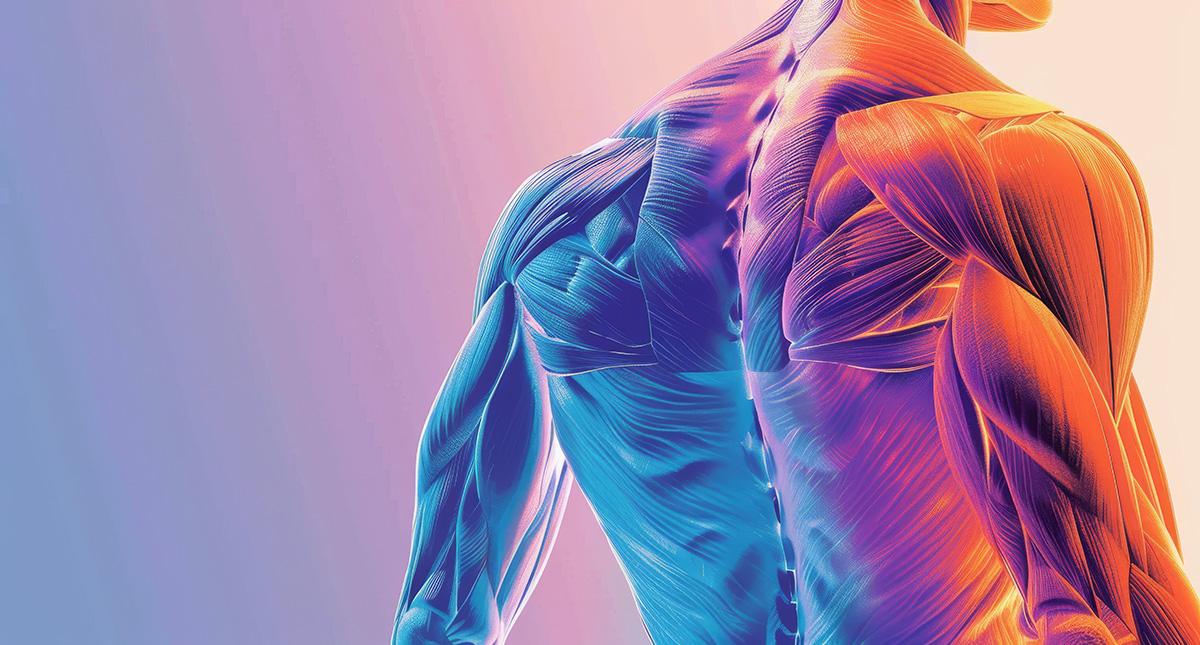
Your muscles aren’t simply carrying you through life. They’re talking to every organ you possess. That’s extraordinary.
Even more extraordinary is what happens when we begin losing them.
Most people begin to lose muscle mass surprisingly early. The process can start in the thirties, gathering pace after fifty and accelerating still further after sixty. Doctors call this gradual decline sarcopenia, but you don’t need to remember the name.
Just remember the consequences.
Less muscle means poorer balance. Greater frailty. Slower recovery from illness. Increased risk of diabetes. More falls. More fractures. More dependency. Even maybe a shorter lifespan.
It isn’t simply that weak muscles make us old. Weak muscles seem to help make us ill. I bet you never read that before!
One of the simplest tests of future health isn’t a complicated blood analysis or an expensive body scan.
It’s grip strength.
Again and again, studies have shown that people with stronger handgrip tend to live longer, recover better from illness and enjoy greater independence well into old age. Grip strength predicts future disability so consistently that many geriatricians now regard it as one of the most useful indicators of biological ageing. Now you can understand why this is so!
A handshake may reveal more about your future than your wrinkles ever could. Think about that.
The story becomes even more fascinating when we look inside the muscles themselves.
Every time you contract a muscle—whether walking briskly, lifting weights, digging the garden or climbing a hill—it begins producing myokines. These remarkable substances help dampen excessive inflammation, improve insulin sensitivity, stimulate repair mechanisms and encourage healthy communication between organs.
Scientists have even nicknamed one of these molecules “exercise in a pill” because of the extraordinary benefits it appears to deliver.
Of course, there is no pill. The muscle has to do the work.
Perhaps the most exciting discovery concerns the brain. For decades we believed that exercise helped memory simply because it improved blood flow. Now we know much more.
Active muscles release substances that encourage the brain to produce new nerve connections and protect existing brain cells. Exercise also increases production of brain-derived neurotrophic factor (BDNF), often called “fertilizer for the brain.” This helps support learning, memory and resilience.
In other words, your muscles help feed your mind. Perhaps this explains why physically active people have lower rates of dementia than those who remain sedentary. The muscles and brain are in constant conversation.
Here is another surprise. Muscle is one of the largest consumers of blood sugar in the entire body. Healthy muscle acts like a huge sponge, soaking glucose out of the bloodstream without demanding excessive insulin. In other words, counter-diabetes.
Lose muscle and the sponge shrinks. Blood sugar begins rising. Insulin resistance develops. Type 2 diabetes follows ever more easily. This may explain why resistance training has become one of the most effective non-drug approaches to improving blood sugar control.
The medicine isn’t sitting inside a bottle. It’s attached to your skeleton. Haha!
Your bones benefit too. For years we’ve been told to think about calcium. Calcium certainly matters but as my friend Tom Levy points out, calcium is DEATH, literally. We don’t want too much calcium. It causes crusting and aging of joints. It slowly infiltrates and damages heart circulation too (coronary artery calcification tests predict aging and death).
Vitamin D matters for bone.
Vitamin K2 matters.
Magnesium. Boron.
But none of these works particularly well if the bones are never challenged. Bones respond to pull. When muscles contract, they tug against bone. This mechanical stress tells the skeleton to remain dense and strong. Without that message, bone quietly dissolves away.
Muscles literally tell bones to stay alive.
Perhaps the greatest misconception is that muscle belongs only to athletes or bodybuilders. Nothing could be further from the truth. You don’t need enormous biceps. You don’t need six-pack abs (uuggh!)
You don’t need to join a gym if you dislike gyms. The goal is not bodybuilding. The goal is preserving the engine that keeps every other system functioning.
Fortunately, muscles remain astonishingly adaptable.
Even people in their seventies, eighties and nineties can increase muscle strength significantly. Numerous clinical trials have shown that resistance exercise performed just two or three times each week improves balance, walking speed, confidence and independence.
The body never completely forgets how to rebuild itself. You simply have to ask.
So how do we protect this hidden organ?
First, use it.

Here’s me building some muscle on Waikiki beach
Walking is wonderful for the heart and circulation, but muscle particularly responds to resistance. That resistance may come from weights, resistance bands, gardening, climbing stairs, swimming, rowing, carrying shopping, yoga or simply repeatedly standing up from a chair.
Challenge creates adaptation.
Second, feed it. Many older adults simply do not consume enough protein. Good-quality protein provides the amino acids required for muscle repair and growth. Fish, eggs, meat, dairy products, beans, lentils and other protein-rich foods all have a role.
Third, don’t fear ageing itself. One of the saddest myths is that losing strength is inevitable. It isn’t. Some decline occurs naturally, certainly. But much of what we call aging is really disuse.
See, we’re typically taught that we are weaker because we are older. But it’s the wrong way round. We are older because we let ourselves get weaker!
The body is astonishingly economical. If we stop asking muscles to work, they conclude they are no longer required. So they quietly disappear.
The good news is that they are surprisingly willing to come back.
Perhaps we should stop asking, “How old are you?” Instead, we should ask, “How much useful muscle have you kept?” That answer may tell us far more.
As medicine advances, we are beginning to realize something deeply encouraging: Health is not merely the absence of disease. It is the presence of reserve.
• Reserve in the heart.
• Reserve in the lungs.
• Reserve in the immune system.
• Reserve in the mind.
• And reserve in the muscles.
Your muscles are far more than motors.
• They are chemical factories.
• Sugar regulators.
• Anti-inflammatory pharmacies.
• Bone builders.
• Brain boosters.
• Perhaps even guardians of longevity.
So if you’re looking for one of the best anti-ageing investments you can make this year, don’t think in terms of yet another expensive cream or another miracle supplement. Start with the remarkable organ you’ve been carrying around all your life. It has been waiting patiently for your attention.
And the wonderful thing is this: It is never too late to answer the call.
Get up, get about, walk, cycle, swim or play sports. You’ll be glad you did!
Now, where’s my tennis racket…
To your good health, Prof. Keith Scott-Mumby
The Official Alternative Doctor