
We all fear it. Well, maybe not all, but we must honestly admit that, as elders, we are vulnerable, without knowing and understanding all the trigger factors. Certainly good living, regular activity, right eating and positive attitude are key to helping fend off disaster.
But in my unique position I know of lots of individuals who should have been OK (all the positive lifestyle factors in place) yet were not. It means there is still a lot to be learned.
Now, couple that with recent studies which purportedly showed that getting a shingles vaccination was partially protective against Alzheimer’s disease (AD). Do we care? What is it telling us? Are we impressed even?
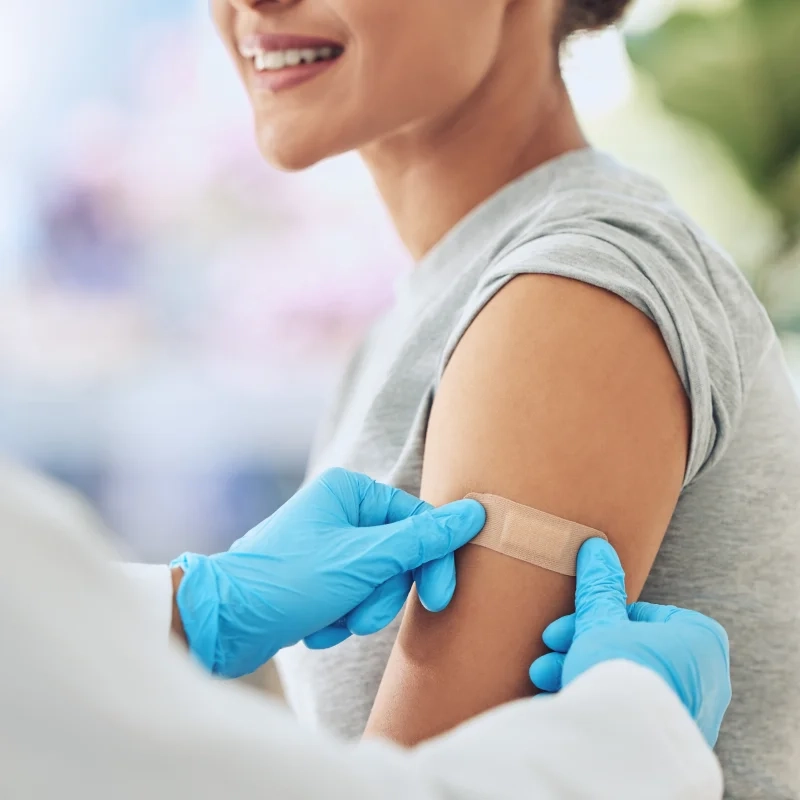
Shingles you probably know is an extension of childhood chickenpox, caused by the varicella-zoster virus (aka. Herpes zoster). It becomes re-activated in later life as a burning, itchy sometimes painful, rash, which can usually be seen lying along the pathway of nerves. Not surprising, since the virus hangs out for years in the peripheral nerves.
One very painful outcome is a condition called post-herpetic neuralgia. Treatment for that has at times reached desperate measures, including repeatedly hitting the painful part with mallets when I was at med school! Personally, I always found that homeopathic Ranunculus did the job of clearing it very well.
Obviously then, because it’s unpleasant, shingles became a natural target for a vaccine. Eventually in 2017 we got Shingrix, from Glaxo-Smith-Kline. It is claimed to reduce the incidence of shingles in adults by over 90%.1
So far, so good. Lots of profits for us and less pain and trouble for the patients!
Understand, these reductions are not massive (2-5% range) but it does indicate something is going on. But what?
Certainly the focus is on brain tissue. The varicella-zoster virus hangs out in the nervous system, as I said. Logically if there is a commotion of inflammation due to a latent virus, brain harm becomes a very real possibility. Blocking that virus from causing inflammation, as with a vaccine, makes sense.
Thus a study published June 16, 2026 in the Annals of Internal Medicine indicates 1 in 17 dementia cases could possibly be prevented by shingles vaccination. Patients in nursing facilities who had received at least one dose of the shingles vaccine within a year of admission had a 5.8% lower risk of developing dementia over the next four years, according to health records of more than 509,000 people, ages 66 and older, who had been admitted to U.S. nursing facilities from 2017 through 2022.2
A study of more than 282,000 older adults in Wales, published in Nature in 2025, found shingles vaccination was associated with a 3.5% reduction in dementia risk.3
Other studies have yielded comparable results.
In reverse, a study published last year in the Journal of Prevention of Alzheimer’s Disease found that older adults in Italy, hospitalized with severe shingles, had a 13% higher risk of dementia compared to the general population!
Any Old Vaccine?
But here’s the thing. It doesn’t need to be a Herpes zoster vaccine. A startling recent study showed that having the BCG (anti-TB) vaccine also gave some protection against dementia!
It is known that BCG (and probably other vaccines) bolster what is known as “innate” immunity, that is the body’s anti-infection protection measures that do not depend on an antibody response. This very important mechanism is, of course, ignored by Big Pharma and vaccine manufacturers. It doesn’t fit their profit model.
They apply for approval based on tests which show that their vaccine induces antibodies. They don’t have to show it protects against any disease, as indeed is the case with measles, only that it produces antibodies. It’s a joke really. We can’t say how much good antibodies do but we can say YOU DON’T NEED THEM! Individuals with a condition called agammaglobulinemia, who are essentially void of B cells and so cannot produce any antibodies, nevertheless acquire normal antigen-specific memory T-cell responses, proving that antibodies are not the sole basis of long-term immune memory.4
This demonstrates conclusively to me that innate or cellular immunity is far more powerful than “acquired” or antibody-based immunity. Yet doctors continually play down innate immunity.
BCG is known to induce “trained immunity,” a form of long-lasting reprogramming of innate immune responses of the non-antibody type. That’s slightly different from the memory of acquired immunity, as I say.
A pilot study provided evidence that BCG vaccination can alter immune activity not only in the blood, but also in immune cells found in the cerebrospinal fluid, the fluid which surrounds and bathes the brain and spinal cord.
“This study was not designed to show that BCG prevents or treats Alzheimer’s disease,” the lead author pointed out. “It was small, open-label, and designed to look at safety and biological mechanisms. But it gives us a biologically grounded rationale for testing whether immune training with BCG could be useful as an early prevention strategy for Alzheimer’s disease.”5
Beyond Plaques and Tau Proteins
The media—and you would think 90% of the medical profession—appear to be fixated on amyloid plaque and tau proteins as the “cause” of Alzheimer’s, which is nonsense.
In fact the abnormalities are likely the body’s own fight-back response and are therefore a good thing.
Alzheimer’s research suggests that the disease is really about immune aging, impaired clearance mechanisms, and chronic neuroinflammatory dysfunction. The role vaccines play in these processes is unclear, but a growing body of literature supports protective associations between vaccines targeting pathogens like influenza, pneumonia, or herpes zoster (shingles) and Alzheimer’s risk.
Yes, to cap it all, it is now emerging that the flu vaccine may give some protection against AD. One wonders where this is going to end!
In one particular study, they chose 65+ years individuals from 2009 to 2019 with a median follow up of 46 months. There were 935,887 matched pairs; 47,889 in the vaccinated group and 79,630 in the unvaccinated group. 5.1% of the vaccinated group developed AD and 8.5% in the unvaccinated group, showing a clear benefit for flu vaccination.
You could argue that was a 40% reduction of risk, which drug companies usually do. But really it is only a reduction of 3.4% overall.
It means we’d have to vaccinate 29 people to save one patient. Not so impressive.
But I’m bringing all this up about vaccines for a reason. A few years ago I raised the question: Is dementia something you “catch”; like a viral illness maybe?
In 2016 I wrote about a series of fascinating studies highly suggestive of the fact that Herpes simplex #1 (HSV1) virus might be a contagious cause of AD. The work was done by Ruth Itzhaki, professor emeritus of molecular neurobiology at Britain’s University of Manchester (where I qualified in medicine!), and her figures were pretty persuasive.
In March 2016, Itzhaki and a world-wide group of researchers published an editorial in the Journal of Alzheimer’s Disease, asking the scientific community to consider a proposed link between Alzheimer’s and certain microbes, notably herpes simplex virus Type 1 (HSV-1), Chlamydia pneumoniae and spirochetes.6
Big Pharma wanted the research stifled because it was contrary to their amyloid plaque reduction drugs approach and resultant enormous profits.
 Prof. Ruth Itzhaki made it to the prestigious Status List of leaders for 2025. I’ve been championing her work for over a decade.
So although Itzhaki and her lab published their first paper in 1991 finding a clear HSV-1 link to Alzheimer’s and there have been over 100 published studies since then, from her lab and elsewhere, the research has gone nowhere.
Out of the $589 million allocated to Alzheimer’s research by the National Institutes of Health in 2015, exactly zero appeared to be spent on studying the proposed HSV-1 connection.
So they can go on saying “there’s no scientific proof” because there isn’t any; they are making sure of that.
Nearly all of us carry the Herpes simplex virus 1 or HSV-1 (the one that causes cold sores), our peripheral nervous system serves as its dormant nesting ground. From there, HSV-1 can reactivate and occasionally cause mild flare-ups of disease, typically when our immune system is overwhelmed due to stress or other infections. Itzhaki’s lab, however, found that by the time we reach our golden years, the virus often migrates to the brain, where it remains capable of resurrecting itself and wreaking a new sort of havoc when opportunity presents, such as when our immune system wavers in old age.
Itzhaki’s team has discovered the presence of HSV-1 in the telltale amyloid plaques used to diagnose Alzheimer’s, so I think she’s onto something here.
It’s probably not a case of a straightforward viral presenting symptom but rather that viral and/or bacterial infections are just one ingredient in a soup of risk factors. But for Alzheimer’s, HSV-1 could be especially significant. Itzhaki has found that elderly people who carried both HSV-1 in the brain and the e-4 subtype of the APOE gene (responsible for creating a protein that helps transport cholesterol throughout the body) were 12 times more likely to develop Alzheimer’s than people without either.
In a 1997 paper in The Lancet, Itzhaki’s group concluded that HSV-1 infection, in conjunction with APOE-e4, could account for about 60 percent of the Alzheimer’s cases they studied. Due to limited funds, however, her group was able to study only a relatively low number of cases.7
“If more funding had been available, more information would probably have been obtained, providing even more supportive data,” she says.
So, circling back to the vaccine benefit issue, I ask: is it possible that the vaccine brings on a more general immune response which leads to a reduction or slowing inflammation caused by other viruses, such as HSV-1?
In the case of the shingles vaccine, and if Itzhaki is right, then would it not make sense that giving an anti-Herpes shot could maybe calm or hold back inflammation due to a latent colony of the same family? And that vaccines aimed at other organisms, if they were effective via the cellular memory mechanism, could also, logically, bring about a certain degree of relief!
I think so. I hope so because, for all their clumsiness and stupid man-made additional dangers, vaccines essentially play to nature’s own skills!
Stay sharp!
To your good health,
Prof. Keith Scott-Mumby
The Official Alternative Doctor
References:
- https://www.cdc.gov/shingles/vaccines/index.html
- dos Reis S, et al “Reduced risk of dementia with recombinant zoster vaccine in US adults age 65 or older” Alzheimer’s Dement 2026; DOI: 10.1002/alz.71407. Please note this study was financed by GSK and had their people in key positions in the study.
- Nature 641, 438–446 (2025). https://doi.org/10.1038/s41586-025-08800-x
- Plebani A, et al. (1997). T cell activity and cytokine production in X-linked agammaglobulinemia. Clinical and Experimental Immunology. 109(2): 234–238
- Weinberg MS, et al. “Bacillus Calmette–Guérin (BCG) immunotherapy reprograms CNS immunity and alters Alzheimer’s biomarkers: results from two open-label clinical trials” Commun Med 2026; DOI: 10.1038/s43856-026-01691-7
- Microbes and Alzheimer’s Disease. Journal of Alzheimer’s Disease, 51(4), 979–984. https://doi.org/10.3233/JAD-160152
- The Lancet, 349(9047), 241–244. https://doi.org/10.1016/S0140-6736(96)10149-5