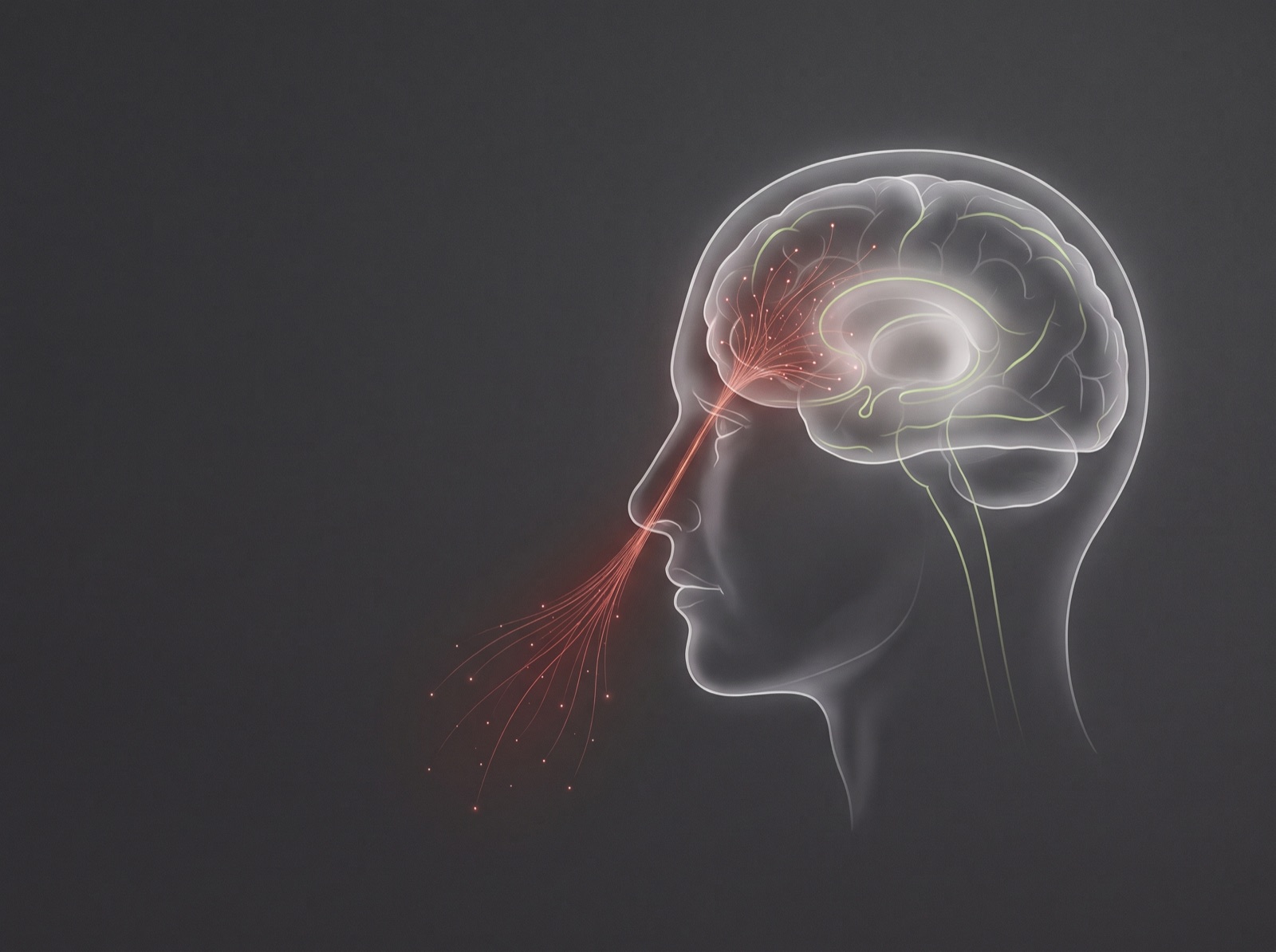
A quick quiz. Which of these is the greediest eater in your body?
A. Your heart (it never takes a day off)
B. Your lungs (twenty thousand breaths a day)
C. Your stomach (it certainly feels like the winner at Christmas)
D. Your brain
See the answer
It’s D, the three pounds of grey jelly between your ears.
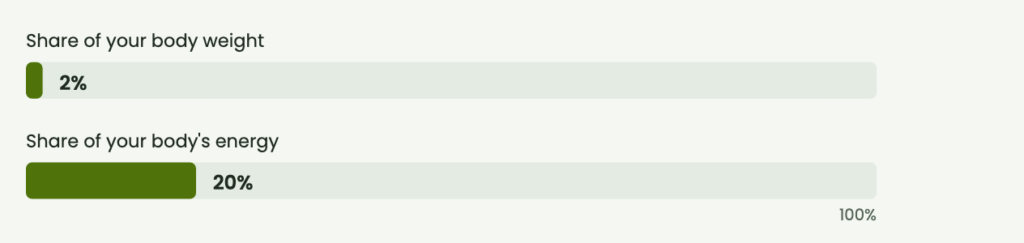
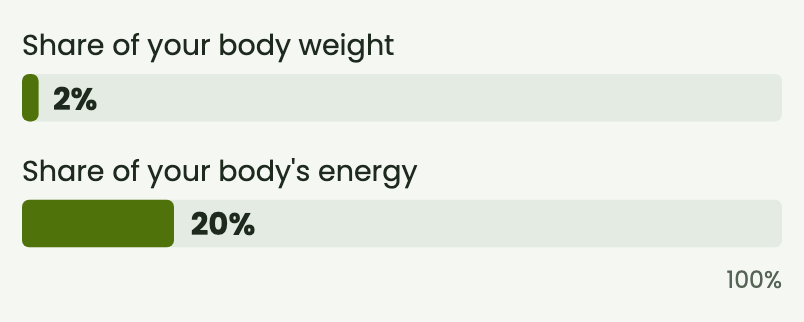
Your brain is about 2% of your body weight. Yet it burns about 20% of your energy. It’s a small car with the fuel bill of a truck.
And when the fuel runs short, the brain complains first. The word that sits on the tip of your tongue and won’t come. The film you watched last Tuesday whose title has simply vanished. Reading the same paragraph three times and taking in none of it.
Most people put this down to age. I don’t buy it! A good deal of it is an energy problem. And you can do something about an energy problem.
So here are three ways to feed that hungry brain. You’ll know the first two, though I’ll give each one a twist. The third almost nobody knows about. It doesn’t go in your mouth at all.
First, Where Does the Brain Get Its Energy?
From mitochondria. These are tiny power plants, thousands of them packed into most of your cells, and brain cells are especially well stocked. They take the food you eat and the oxygen you breathe and turn them into ATP, the body’s gasoline.
Feed the power plants and you feed the brain. Starve them and you get the fog.
Hold on to that picture. Everything below comes back to it.
Way #1: Food (Put the Right Fuel In, Keep the Bandits Out)
I’ll be brief, because you know the basics. Three that earn their place:
Oily fish: salmon, sardines, mackerel. Your brain is built largely of fat, and the omega-3 called DHA is one of its main building blocks. Twice a week.
Dark berries: blueberries above all. Your power plants throw off free radicals as exhaust, and berry pigments help mop them up.
Eggs: the yolk carries choline, the raw material for acetylcholine, the messenger your brain uses to lay down memories.
(And yes, a square of dark chocolate. Good news at last!)
Now the twist. What you take OUT can matter as much as what you put in.
Back in the 1980s and 90s I was known as something of a king of “brain allergies.” Case after case of fog, low moods and worse traced back to everyday foods. Often perfectly wholesome ones. Wheat. Milk. Even eggs, which I praised a moment ago. That’s the maddening part: one person’s brain food is another person’s bandit.
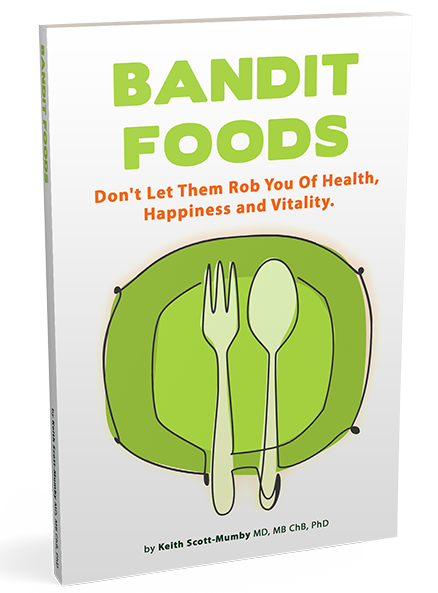
I call them bandit foods because they quietly rob you of energy and clarity, and brain fog is one of the commonest signs. Here’s a clue from forty years of detective work: the culprit is often the food you would hate most to give up. My short book Bandit Foods shows you how to catch yours.
Way #2: Supplements (Spark Plugs for the Power Plants)
Two I’d put at the top of any brain list.
CoQ10: your mitochondria cannot make energy without it. The trouble is, your body makes less of it as you age. Worse, statin drugs block the very pathway your body uses to make CoQ10. So the pill meant to protect your heart may be draining your brain’s batteries. I’ve written about statins and memory before, and I’ll keep at it until somebody listens! If you’re on a statin, ask about CoQ10.
Lion’s Mane mushroom: a shaggy white thing that looks like a lion’s mane, or an old man’s beard, depending on your mood. Japanese researchers found compounds in it that stimulate nerve growth factor, a protein brain cells need to grow and repair. In a small Japanese trial, 30 older adults, aged 50 to 80, whose memory had slipped enough to earn a diagnosis, took it or a dummy tablet for 16 weeks. The Lion’s Mane group’s scores on a thinking test rose steadily while they took it. Four weeks after they stopped, the scores had dropped back down.
Remember that last detail. It comes up again.
Supplements support the machinery. But no capsule can do what comes next.
Way #3: Light (The One Almost Nobody Knows About)
Here’s the bit I love.
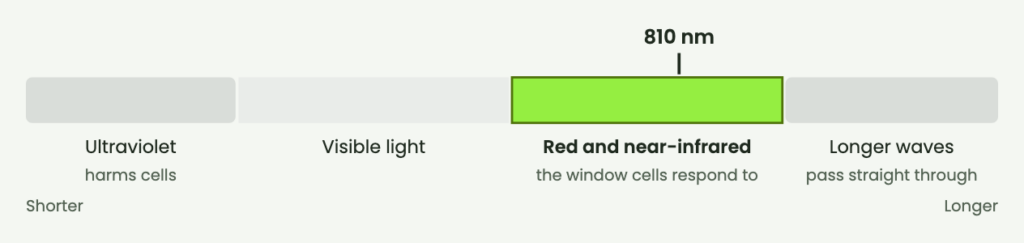
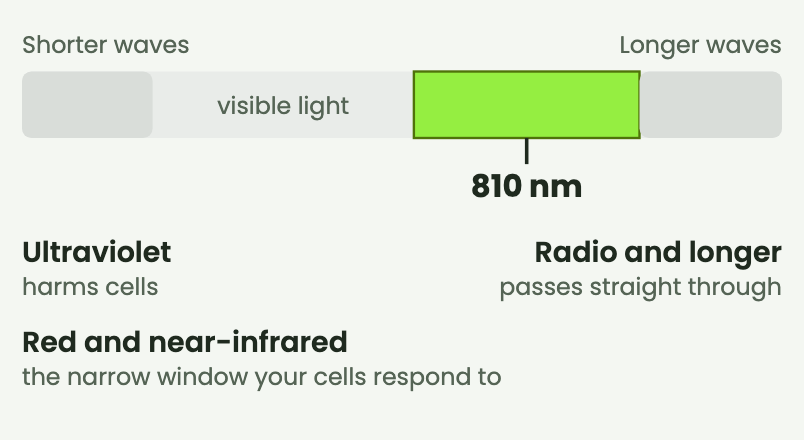
Your mitochondria are built to absorb light. Only a narrow band of it, mind you: red and near-infrared. Go shorter and you reach ultraviolet, which harms cells. Go much longer, out to radio waves, and it passes straight through without doing a thing. Inside that narrow window, light nudges the power plants to make more energy.
Going Deeper
Inside each power plant sits an enzyme (cytochrome c oxidase, if you’d like to impress your doctor) that soaks up red and near-infrared light. When it does, the cell’s energy line runs faster and more ATP comes out the other end. That’s why researchers call it photobiomodulation: you’re coaxing cells to do more of what they already do well.
This autumn I spent the best part of two hours with Dr. Lew Lim, the man who developed light therapy through the nose in the mid-1990s and went on to found Vielight. More than 40 brain studies have now used his devices. I asked him whether we could say, in one line, that this light stimulates and revives tired mitochondria. His answer: “Yeah, based on all the research done.”
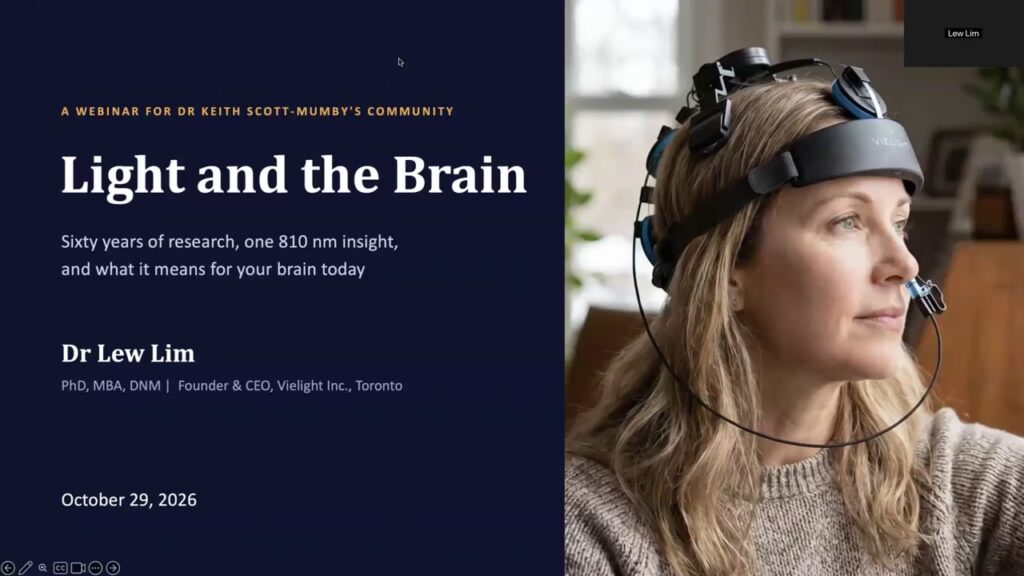
His devices use 810 nanometres, which he called “just about the most researched wavelength.”
The hard part is getting the light IN. Through the skull it has to fight past hair, scalp, bone and a layer of fluid, and most of it scatters on the way. So Dr. Lim went in through the nose. (Up the nose, yes. I only promised it wouldn’t go in your mouth!) When he first started, people found the idea, in his words, “kind of goofy and strange.” Then his team measured it. Just above the roof of your nose sits the thinnest bone in your skull, and the light reaches the brain about 20 times more efficiently that way.
Vielight’s own video shows a live brain scan from a study by Baycrest and the University of Toronto. The light goes in through the nose, and within three to six minutes the whole brain responds, on both sides. Watching it is quite something!
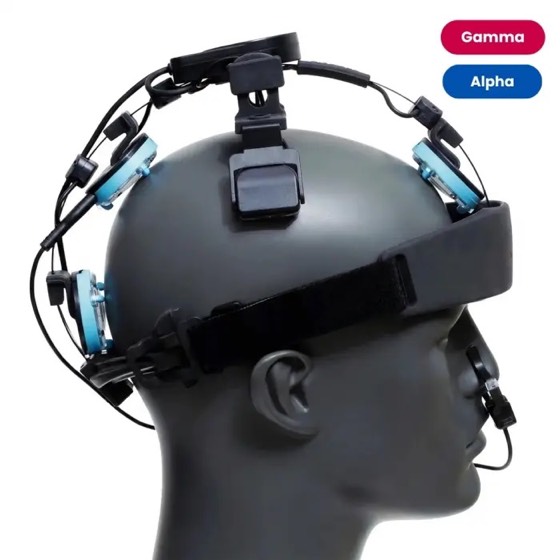
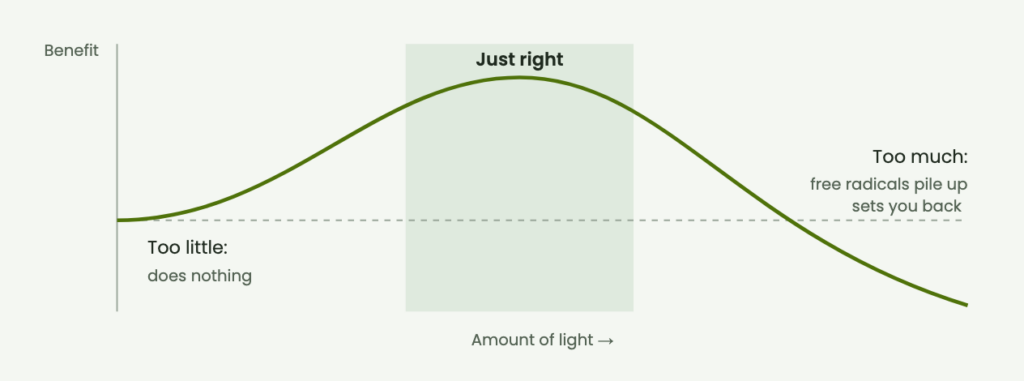
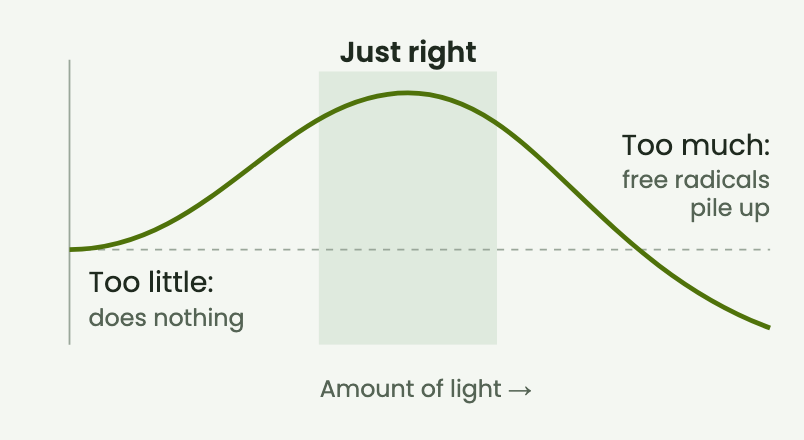
One warning, because this is where keen people go wrong. With light, MORE can set you back. A little coaxes the cell along. Too much floods it with free radicals faster than your body can clear them. That’s why the Neuro headset switches itself off after 20 minutes. I told Dr. Lim I hoped nobody would be daft enough to use it two or three or four times a day. Ever the fair-minded scientist, he reminded me that some people handle it perfectly well. We’re all different.
That goes for rhythm, too. The Neuro pulses its light, either at a calm 10 beats a second (Alpha) or a sharp 40 (Gamma). One professional hockey player couldn’t tolerate Gamma and did well on Alpha.
And remember the Lion’s Mane trial, where the benefit faded once people stopped? Dr. Lim told me a story with the same shape. A group of retired football players did well over six weeks of sessions in a clinic. When the sessions stopped, they began to slide back almost at once. Given a device to use at home, they recovered to where they had been.
Brain care is like brushing your teeth. You keep doing it.
How to Feed Your Brain, Starting This Week
- Notice when your brain runs low. The time of day the words go, the slump after lunch. That’s your energy bill showing.
- Eat for your brain. Oily fish twice a week, berries or an egg most days.
- Hunt one bandit. Pick the food you’d hate most to give up and drop it completely for two weeks. Notice how your head feels.
- Ask about CoQ10. Especially if you’re over 60 or on a statin. Talk to whoever prescribed it.
- Give your power plants light. One 20-minute session, sitting down, two to seven times a week.
If number five is new to you (and for most people it is), hear it from the man himself. Dr. Lim is refreshingly careful: he tells you what the studies show and stops there. Start with the few minutes where he explains why the nose works. If you’re hooked, the rest of our conversation is chaptered, so you can jump to whatever you care about.
Hear Dr. Lim explain why the nose works
It’s never too late. Start right now.
To your health,
Prof. Keith
Related reading: Statins and memory loss · The anti-aging benefits of CoQ10
Sources
- Dr. Lew Lim in conversation with Prof. Keith, “Light and the Brain” webinar, October 29, 2026 (alternative-doctor.com/neuro4). Brain energy 7:28; why the nose 8:49; light, not heat 12:20; mitochondria and 810 nm 19:35; through the skull 22:21; when people stopped 28:26; can you overdo it? 1:20:33.
- Vielight explainer video shown in the webinar (Baycrest Health Sciences and University of Toronto fMRI study, intranasal 810 nm).
- Mori K, et al. Improving effects of the mushroom Yamabushitake (Hericium erinaceus) on mild cognitive impairment: a double-blind placebo-controlled clinical trial. Phytotherapy Research. 2009;23(3):367-372.
- Kawagishi H, et al. Hericenones C, D and E, stimulators of nerve growth factor (NGF)-synthesis, from the mushroom Hericium erinaceum. Tetrahedron Letters. 1991;32(35):4561-4564.
- Hamblin MR. Mechanisms and applications of the anti-inflammatory effects of photobiomodulation. AIMS Biophysics. 2017;4(3):337-361.
- Scott-Mumby K. Can You Really Prevent Dementia? The Surprising Truth. Mother Whale Inc, 2025.