Now listen to me, listen carefully. You all know I HATE hospitals and warn people against ever going there. Therefore you may be sure that what follows is my best judgement, from the heart.
There is one situation where hospitalization must be considered and that is giving birth. We have lost far too many young potential mums to avoidable disasters that can arise and arise suddenly at the point of birth. They were not close enough to help and didn’t survive.
And that’s the problem in a nutshell. Quite a lot can go wrong, giving birth. Some of it is just awkward but some happenings are instantly life threatening. The most deadly is hemorrhage. It can be sudden and torrential, killing the mother-to-be unless she gets an IMMEDIATE transfusion.
I know most of you are in the elders age group and will never see pregnancy again. But you have daughters and granddaughters. This understanding needs to be spread widely, not as fear but as a sensible, risk-related position.
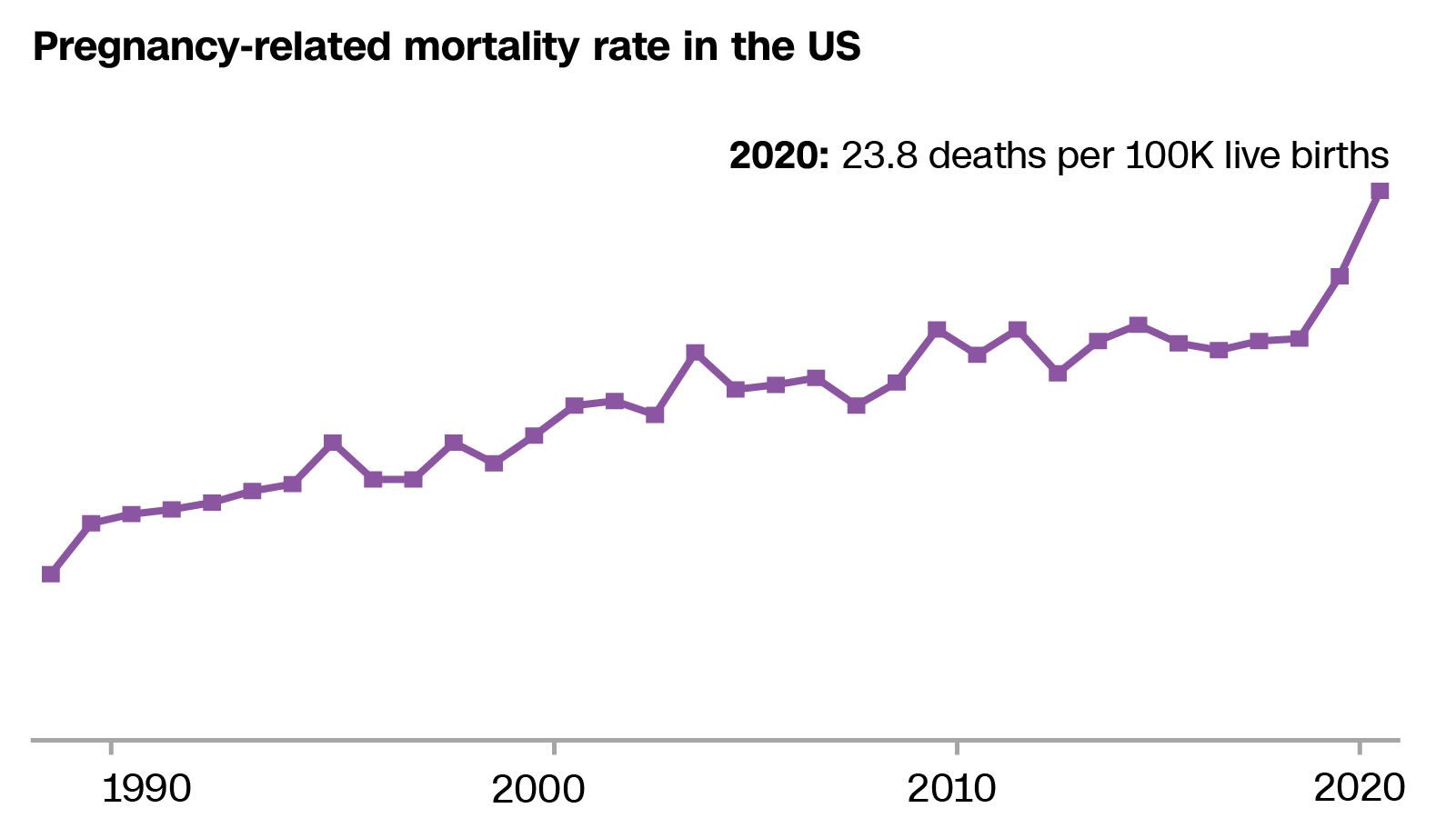
It’s a little-known fact that pregnancy-related mortality in the US has been rising in recent years
Look, some of this is historic. You need to know just how dangerous giving birth is. In the old days up to one in ten women would die as a result of giving birth (I have seen some quotes as high as one in three but I doubt that was correct for women in what we now call developed countries).
Notwithstanding, birthing was a time of great fear for women. And rightly so. During the birth and the following few weeks a woman faced around six times her normal risk of death.
 Marble relief from Ostia Antica showing a childbirth scene.
But it’s worse. Not only was there a danger of death DUE to the pregnancy but also a major risk from CONCOMITANT infection… puerperal sepsis or so-called childbirth fever, which carried up to 50% mortality WELL INTO THE 20TH CENTURY.
I know you are all experts now, because of “Call The Midwife”! But in the past it WAS grim. I witnessed the start of the changes as a med student, when the “Flying Squad” had just come into being. This refers to a specialized, rapid-response obstetric medical team (midwives, obstetricians, anesthetists), that traveled quickly to home or rural births with emergency equipment (blood, fluids, drugs) to stabilize critically ill mothers (e.g., severe hemorrhage, eclampsia) for safe transfer to hospital.
Get that: emergencies were so sudden and severe, the hospital had to go to the home, there was never enough time to get mother and baby to the hospital!
And that’s always been the problem. Lack of time. So when the OBGyn finds sufficient cause for concern and recommends coming into hospital at the onset, it may be wise to do so. Sure, I know American medicine is ridden with greed and unnecessary treatments. But remember I trained into the finest health system in the world: the British National Health Service (NHS), which was not driven by profits at all, just public service.
Times have changed and it’s all run by the suits now (accountants), who have no medical training or knowledge but presume to tell trained doctors what to do, based on the profit motive. And the outcomes can be variable, to say the least.
The Home Birthing Cult
The home-birth revival began in the late 1960s, along with the natural childbirth movement (Lamaze, Grantly Dick-Read).
Feminism’s second wave saw obstetrics as paternalistic and sometimes outright abusive. Women wanted their bodies back. It was a revolution: science on one side, mysticism returning on the other, and rebellion in the middle.
Meanwhile, midwifery—nearly exterminated in the mid-20th century—began to re-emerge.
By the late 1970s, tens of thousands of women in the U.S., U.K., Netherlands, Australia, and New Zealand were choosing home birth not because they lacked access to hospitals, but because they wanted a different kind of birth—intimate, gentle, spiritually charged, or simply intervention-free.
Outcomes research began trickling in: under certain conditions (low-risk pregnancies, trained midwives, proper transfer systems), home birth outcomes looked surprisingly safe FOR THE MOTHER (but see below).
Home birth today is less fringe and more “intentional alternative lifestyle choice.”
Some do it for empowerment. Others for spirituality. Others simply because they don’t want fluorescent lights, beeping monitors, or a stranger telling them when to push.
Birth centers appeared. Midwifery licensing expanded. Hospitals softened at the edges—birthing tubs, dim lights, partners present, fewer routine interventions, etc. The “craze” has matured into a structured subculture.
The 2020 pandemic gave another sudden nudge—fear of hospitals drove a new wave of home births, echoing that earlier distrust of medical institutions.

A water birth at home (that’s the placenta, not jello in the dish!)
There are no studies or statistics I could find, to prove home births are dangerous FOR THE MOTHER. The real problem is that it is clearly dangerous FOR THE BABY! In the clamor for women’s rights over their bodies, this often gets dropped from the arguments.
A landmark 2010 review by John R. Wax et al., comparing “planned home birth” vs “planned hospital birth,” found neonatal death rates nearly doubled in the home-birth group and for “offspring without congenital defects,” the risk was almost tripled.²
A more recent 2020 U.S. study by Amos Grünebaum and colleagues found that planned home births had a neonatal mortality of 13.66 per 10,000 live births, compared to 3.27 per 10,000 for hospital births attended by certified nurse-midwives — a nearly four-fold increased risk.³
And Now We Have The “Freebirth” Movement.
Capitalizing on medical distrust, some internet influencers are selling guides to “freebirths” (medically unassisted births) and “wild pregnancies” (pregnancies without prenatal care).
It is madness. Criminal madness.
“You are powerful — birth like it,” the group’s website says. Memberships and courses to be part of the community run to hundreds of dollars.
One of the Free Birth Society’s mantras is that women’s “bodies do not grow babies that we cannot birth.” That’s absolute bullshit (and there, you see: I’m so angry, I don’t even want to abbreviate the cussing). There are fit, healthy girls that just cannot get the baby out, even after 24 hours or more of intense labor. What does the Free Birth Society have to say about those? Pull yourself together? Try harder? Caesarians may be overused but there are times when it HAS TO BE used, otherwise death results.
So while Free Birth Society leaders raked in millions and grew their platforms, moms across the globe lost their babies and suffered often preventable and treatable complications, an investigation found.
For instance, Gabrielle Lopez, a mother who followed Free Birth Society protocol, managed to birth her son despite shoulder dystocia (shoulder getting jammed in the vagina). She ended up having to take her newborn son to the hospital because he wasn’t breathing. He was asphyxiated for 17 minutes, suffered hypoxic-ischemic encephalopathy, and had to stay in the hospital for 21 days. Now 3 years old, her son is disabled and fed through a tube.
Look, I understand women’s concerns about the standard of medical care in the US (or should I say concerns about medical caring?) It’s proverbial that OBGyns want to bring on a woman’s labor with a drip, or schedule a caesar that may not even be called for, just to get the delivery done before golf time or an anniversary weekend.
As Nikki Zite, MD, MPH, a professor of obstetrics and gynecology at the University of Tennessee Graduate School of Medicine in Knoxville states, “I understand and respect that many people are drawn to alternatives to hospital-based obstetric care after experiences of trauma, disrespect, or perceived loss of autonomy in the healthcare system.”
But to ignore the powerful impact of preparatory care on maternal and fetal mortality is beyond silly. The best way of guiding women safely through their pregnancy is frequent monitoring and being aware what may arise that could affect the safety of mother and child. Pre-eclampsia, for example is a dangerous condition that doesn’t usually show itself till about 20 weeks, and could even lead to deadly eclampsia (soaring blood pressure, often leading to convulsions, stroke and organ damage), which carried off a great many women in the past.
David Hackney, MD, a maternal-fetal medicine physician at Case Western Reserve University in Cleveland, noted that for many patients drawn to the freebirth movement, “the root causes are their genuine adverse medical experiences: poor communication, insufficient respect for autonomy, undesired outcomes.”
“Misinformation often starts with some kernel of truth, a genuine problem facing our patients, which is then twisted in unsubstantiated, dangerous directions,” Hackney added.
And I like what he said next: “While it is important to combat harmful misinformation, it is also important that medicine strives to be better.”
Melissa Simon, MD, MPH, an ob/gyn at Northwestern Medicine in Chicago and director of the university’s Elevate Lab, told MedPage Today that the freebirth movement “is actually scary.”
“It saddens me that people have lost trust and faith in healthcare providers and in our healthcare system,” she said, noting that given the high maternal mortality rate in the U.S., pregnant people should be able to “receive care in places and spaces in which they feel welcomed, valued, heard, and supported.”
Clearly the failing is partly from the medical side and I can say we don’t meet the same degree of disrespect towards women in Europe. But caution must come from the family side, with due care and reverence for the fact that the woman is producing an absolute miracle. Birth is not a game, or a women’s rights crusade. It’s an act of creation that is so amazing, it has numerous ways of going wrong.
Be wise.
And it just remains to finish on a personal note. I LOVED delivering babies; so much so, I delivered twice my student quota. I’ve delivered (by hand, not scalpel) over 50 babies in my time, including my own son!
It’s messy, with pee, shit and blood and baby treacle poop (meconium)… but it’s GLORIOUS when that little creature draws it’s first breath!
To your health, Prof. Keith Scott-Mumby
The Official Alternative Doctor
SOURCE: https://www.medpagetoday.com/obgyn/pregnancy/118843
REFERENCES:
- https://www.jameslindlibrary.org/articles/an-early-medical-research-council-controlled-trial-of-vitamins-for-preventing-infection/?utm_source=chatgpt.com
- https://www.ncbi.nlm.nih.gov/books/NBK78791/
- J Obstet Gynecol. 2020 Aug;223(2):254.e1-254.e8. doi: 10.1016/j.ajog.2020.01.045. Epub 2020 Feb 7