Is there such a thing as “turbo-cancer”?
A few radicals and big names in the public space believe there is. Russell Blaylock comes to mind; Joe Mercola; Ryan Cole and William Makis. What exactly is meant by “turbo-cancers”? That’s quite a large part of the problem. There is no real definition and so no consensus. It’s more the sort of label that gets started by so-called influencers on the internet. They have no medical training and use such catchy terms to make a point, not a fact.
But generally what is meant by turbo is fast-growing cancers that are unusually aggressive and which tend, for some reason, to strike younger people.
This possibility is generally compounded by the suspicion/belief that a sudden rise in extra-deadly cancers has been caused by the mRNA vaccines developed for COVID. It’s plausible, certainly. mRNA vaccines have been a worldwide experiment in manipulating human genetic material, without any foreknowledge whatever of likely consequences (and seemingly no concern whatever, in the rush for profits, about possible unpleasant or deadly consequences).
Turbo cancer is now definitely a term linked with COVID vaccines. And sources are lumping the two together as one causing the other. You may have read widespread speculation that recent cancers in the British Royal family (viz. King Charles and Catherine, Princess of Wales) were brought on by their COVID vaccination.
Of course, once again, it’s plausible. But not proven.
Putting the pieces of the puzzle together has proved very difficult, since Big Pharma has been gaslighting us all, lying and obscuring poor outcomes. “There’s no link,” they scream, defensively. “Turbo cancer” is not real. “COVID-19 vaccines don’t cause cancer.”1
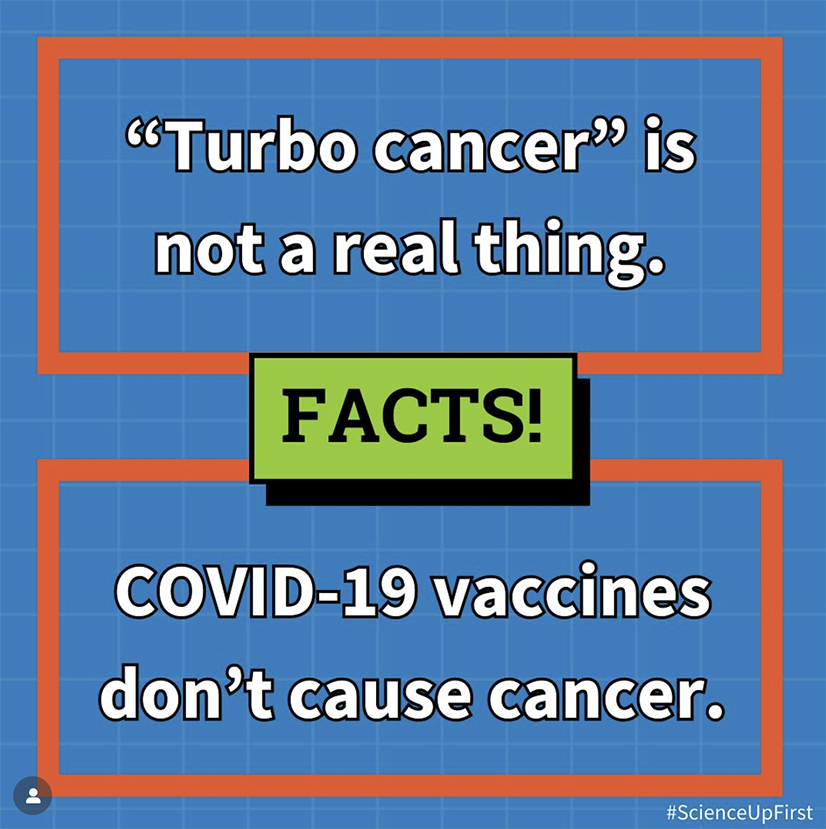
How can they possibly know? It will take many years, possibly a decade or more, to establish causality. Even the layman knows that.
Any denial at this stage is just flim-flam from Pharma toadies.
Dr. Paul Marik of high-dose-vitamin-C-saves-lives fame thinks there is definitely an issue. I quote:
“The incidence of cancers has increased exponentially worldwide since the universal COVID-19 vaccination program began at the end of 2020. These cancers tend to present at an advanced stage, progress rapidly, and occur in younger patients. Additionally, some patients previously in remission have been reported to develop uncontrolled cancer relapses shortly after receiving a COVID-19 vaccination (usually a booster). The temporal association between these cancers and COVID-19 vaccination is undeniable. These observations have given rise to the term “turbo-cancers.”
“In addition, we propose that the SARS-CoV-2 spike protein directly interferes with the fundamental pathways causing carcinogenesis, namely metabolic reprogramming, cancer stem cell propagation, apoptosis resistance, metastatic potential, and altered immune surveillance.”2
Trouble is, a person of scientific bent like myself, wants to see charts and I had a great deal of trouble finding the evidence of this recent “exponential” rise. I spent an hour combing the net and had ChatGPT looking too, for actual charts showing the supposed increase.
Rather what becomes obvious is that cancer incidence was beginning to soar long before the COVID vaccine was rolled out. For instance, a JAMA article published in 2023 but looking at the period 2010 – 2019 was already referring to the incidence rates of early-onset cancers (cancers under 50) increasing “substantially” over the study period. Gastrointestinal cancers had the fastest-growing incidence rates among all early-onset cancers.3
The best chart I could find was for the period up to 2018, where it is clear that the rise in cancers affecting the young was well under way by 2020.
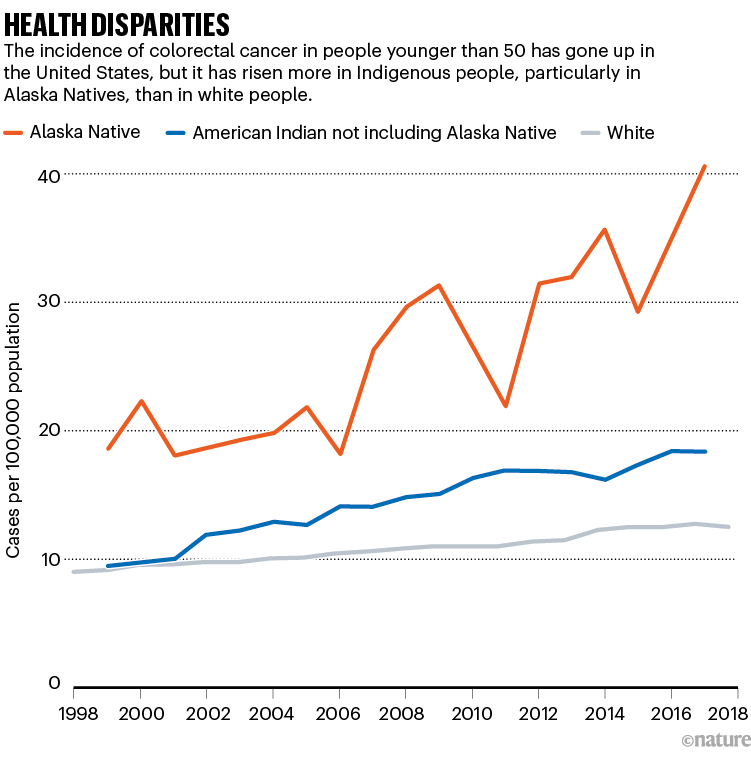
But it’s nowhere near “exponential (steep). According to a publication by the American Cancer Society, the incidence rate among non-Alaskan younger people has increased by about 1% per year since the mid-2000s.4
What’s Really Going On
I think there is another explanation of the recent changes in cancer incidence and mortality. It’s due to the COVID “pandemic” but not necessarily anything to do with the mRNA vaccine.
At the height of pandemic hysteria in 2020 – 2021, almost all hospitals and health facilities ground to a halt. Cases were not being seen routinely, no screenings, far fewer treatments, no follow ups, just pandemonium on the wards, caused by the gross mismanagement of the situation.
People were afraid to go to hospital and did not come forward for diagnosis or treatment of a wide variety of conditions, including cancer.
As a result, cancer that should have been diagnosed during the pandemic would now be diagnosed later, and likely at a more advanced stage. This backlog could be expected to lead to an overall higher mortality rate from cancer since more advanced cancers are also harder to treat. They would seem extra-aggressive.
There is a rapidly growing corpus of data that gives weight to this point of view:
National Cancer Institute / U.S. data — delayed diagnoses in 2020
A 2024 U.S. study found that during 2020 the number of new cancer diagnoses dropped sharply — presumably as I said because people skipped or couldn’t access screening and diagnostic care.
The study notes that early-stage diagnoses (the easier ones to catch early) were especially reduced, resulting in fewer “early-catch” cancers.5
Because early detection is tightly linked to better outcomes, this underdiagnosis could lead to a later surge of more advanced cancers and worse prognoses.6
Thing is, this wasn’t just happening in the US or UK. It was a global phenomenon. A 2022 review covering 33 publications found that worldwide cancer-screening rates dropped sharply during COVID — across cancers, across all demographics. Cancer screening was suspended for at least 30 days in 13 countries (in some cases a lot more than 30 days). Many screening types were suspended or postponed, sometimes for months.7
This caused a backlog of “missed” screenings and diagnostics that — once services resumed — would surface as a wave of later-stage diagnoses.
And that seems to have been exactly what happened. I’m no apologist for the COVID mRNA experiment, as you know. But we need to keep our feet firmly on the ground. Numerous authors/influencers are reporting “turbo cancers” but I can find little evidence, at this stage, for such a concept. Instead, I find evidence for a couple years of strangled cancer screening and treatments, leading to missed diagnoses and lost treatments opportunities, in turn leading to a later outburst of more advanced (ie. more aggressive) cancers once everyone got back to normal work.
We won’t know the truth for a little time yet. Meantime I reaffirm the need to search for real causes. Crappy diets, toxic burdens, psychological stresses and the burgeoning tendency to use dangerous drugs as a “solution” to all of nature’s ills are where my money lies. These are the important current dangers. Let’s not get distracted by the Plandemic. That’s over and we are now back in the real world!
Stay healthy, enjoy the rewards of good health.
 Prof. Keith Scott-Mumby
The Official Alternative Doctor
References:
- https://scienceupfirst.com/covid-19/turbo-cancer-is-not-real-covid-19-vaccines-dont-cause-cancer/
- Paul Marik and Justus Hope. COVID-19 mRNA-Induced “Turbo Cancers”. J Indep Med. 2025. Vol. 1(3):185-194. DOI: 10.71189/JIM/2025/V01N03A02
- JAMA Netw Open. Published Online: August 16, 2023. 2023;6;(8):e2328171. doi:10.1001/jamanetworkopen.2023.28171
- https://www.cancer.org/content/dam/cancer-org/research/cancer-facts-and-statistics/annual-cancer-facts-and-figures/2024/2024-cancer-facts-and-figures-acs.pdf
- https://jamanetwork.com/journals/jamaoncology/fullarticle/2815435
- https://www.cancer.gov/news-events/press-releases/2024/covid-pandemic-impact-on-new-cancer-diagnoses
- Impact of COVID-19 on cancer screening: a global perspective. Curr Opin Support Palliat Care. 2022 Sep 1;16(3):102-109. doi: 10.1097/SPC.0000000000000602. Epub 2022 Jul 18. PMID: 35862881; PMCID: PMC9451605.