
The whole world was saddened recently by the death of a super-angel. We all have to go, of course. But Dolly Parton was not that old (same age as me, in fact!) It was quite a surprise.

She always looked so vibrant and healthy, though I did read reports recently of her having to cancel or pull back on public performances, due to health issues.
When the C word was finally used, it became more understandable. Poor old Dolly had such faith in the medical profession (to the point of donating $1million to Moderna’s Fauci scam). But I doubt the doctors did her any good, for all her wealth.
Anyway, I don’t want to discuss Dolly’s health beyond that. Not relevant or none of our business!
But the issue was raised (by her) that the years of looking after her beloved husband Carl Thomas Dean, as a caregiver, took its toll. She admitted to rather letting her own health decline, though neglect, while looking after him. That’s something we can’t afford to do, at any age.
It made me think a good deal on one of my walks. It could be a maxim, that we MUST look after ourselves, well into old age, so we do not become a burden on our spouse or relatives. It’s not fair to take the view “I don’t care about preserving health.” It’s just passing the buck and means someone else will get all the dirty work that you are laying up.
And it doesn’t work to just say, “I’ll go into hospital or a home.” Unless you are VERY rich, that will soon burn through all your capital. Besides, your family may not want that for you and will sacrifice themselves to keep you outside the system and in their loving care.
No, it really comes down to a DUTY, that we must take care of ourselves as fully as possible, for as long as possible.
In a lively video titled “I ain’t dead yet!”, Dolly explained: “Back when my husband Carl was sick, that was a long time, and then he passed, I didn’t take care of myself, so I let a lot of things go that I should have been taking care of.”
Parton’s husband, Carl Dean, died in March 2025. While the couple never disclosed what disease he had, Parton shared that he was “ill for quite a while.” We don’t know how she didn’t take care of herself, but her few words speak volumes given that she had been taking such extensive care of her husband.
When you care for someone else, it is all too easy to neglect to care for yourself.
63 Million in The USA Alone
There are 63 million caregivers in the USA, a nearly 50% increase since 2015.
Demographics: One in every four adults is a caregiver. Of these, 94% care for adults, and one in three is under age 50. Caregivers are increasingly diverse across race, income, and generation. 29% are sandwich generation caregivers, supporting both children and adults.
Intensity and Complexity: Over 40% of caregivers now provide high-intensity care. Many perform complex medical tasks like administering injections or managing equipment, yet only 22% receive training.
Health and Financial Strain: One in five caregivers report poor health; a quarter are taking on debt due to caregiving. Half report negative financial impact due to caregiving, and one in five cannot afford basic needs like food.
Workplace Impact: Seven in ten family caregivers are employed, but many face disruptions and lack access to supportive benefits.
In fact only 11 million of the 63 million caregivers receive any compensation, through Medicaid, VA, or other state programs. These caregivers are more likely to be younger, lower-income, and from diverse backgrounds.
Caregiving Comes With A Serious Health Risk
Some 23% of caregivers report that they find it difficult to pay attention to their own health while caring for another, according to a report from the National Alliance for Caregiving and the AARP.
Carers often neglect routine health visits and screening, which might detect problems before they get started proper. Also, when people are spending much of their days dealing with hospitals or at doctor’s offices with those they care for, they just don’t want to spend any precious free time in a medical setting for themselves.
Moreover, when a caregiver takes their care partner to a doctor’s appointment, hospital or treatment, they are rarely asked how they, the caregiver, are doing, or if they need support.
There is a huge emotional toll, including anxiety, guilt and depression. On top of that there is a limitation of capacity to socialize or do things like attend shows, or literary meetings and gatherings.
Even those who do long-distance caregiving can experience burnout and self-neglect. The average family caregiver spends 27 hours a week on care and many put in 40 hours or more. There is an intensity that comes with caring for someone with a serious illness, which doesn’t leave much room for self-care.
Close to two-thirds of caregivers report emotional stress, and 45% report physical strain. There is the additional burden of loneliness, experienced by nearly a quarter of all caregivers who may be missing opportunities to socialize and connect outside their homes, away from the family members and friends they care for.
Love Becomes Captivity
One of the cruellest aspects of family caregiving is that love can quietly turn into captivity. The caregiver begins by helping someone they love, and months or years later discovers that almost every hour, decision and emotion revolves around somebody else’s needs.
Here’s are some strategies which will act as ways of giving the caregiver at least some of their life back.
-
Stop believing that love requires unlimited availability
This may be the most important one. A caregiver can love someone profoundly without being available every minute of every day. Yet guilt creates the feeling that going shopping, meeting a friend, taking an afternoon off—or simply closing the bedroom door and reading a book—is somehow abandonment.
It isn’t.
The caregiver needs protected periods in which they are off duty. Not “off duty unless something happens.” Properly off duty. Someone else takes responsibility, the phone can be ignored, and for two or three hours they become themselves again.
That psychological separation can be enormously restorative.
-
Build a team—even a tiny one
Caregiving becomes particularly destructive when one person becomes the indispensable person. Everything comes through them: medication, meals, appointments, washing, transport, emotional reassurance, emergencies.
Instead of vaguely telling relatives, “I could use some help,” give people ownership of specific jobs.
One person does Tuesday shopping. Someone else takes the patient to appointments. A neighbor sits with them Thursday afternoon. Another relative makes three freezer meals. Somebody else handles insurance paperwork.
People are often surprisingly willing to help but remarkably bad at inventing ways of doing so.
The caregiver should become the coordinator of care, not necessarily the provider of every piece of care.
-
Create one sacred piece of the day
Even where respite care is impossible, reclaim something small that belongs absolutely to the caregiver.
Perhaps 7:00–7:30 every morning is coffee in the garden. Perhaps there is an evening walk. An hour of painting. Music through headphones. Meditation. Gardening. A long bath. Twenty minutes sitting in sunlight doing absolutely nothing useful.
The activity matters less than the principle:
“This piece of my life still belongs to me.”
That is sovereignty in miniature—and sometimes miniature sovereignty is where recovery begins.
-
Put pleasure on the schedule
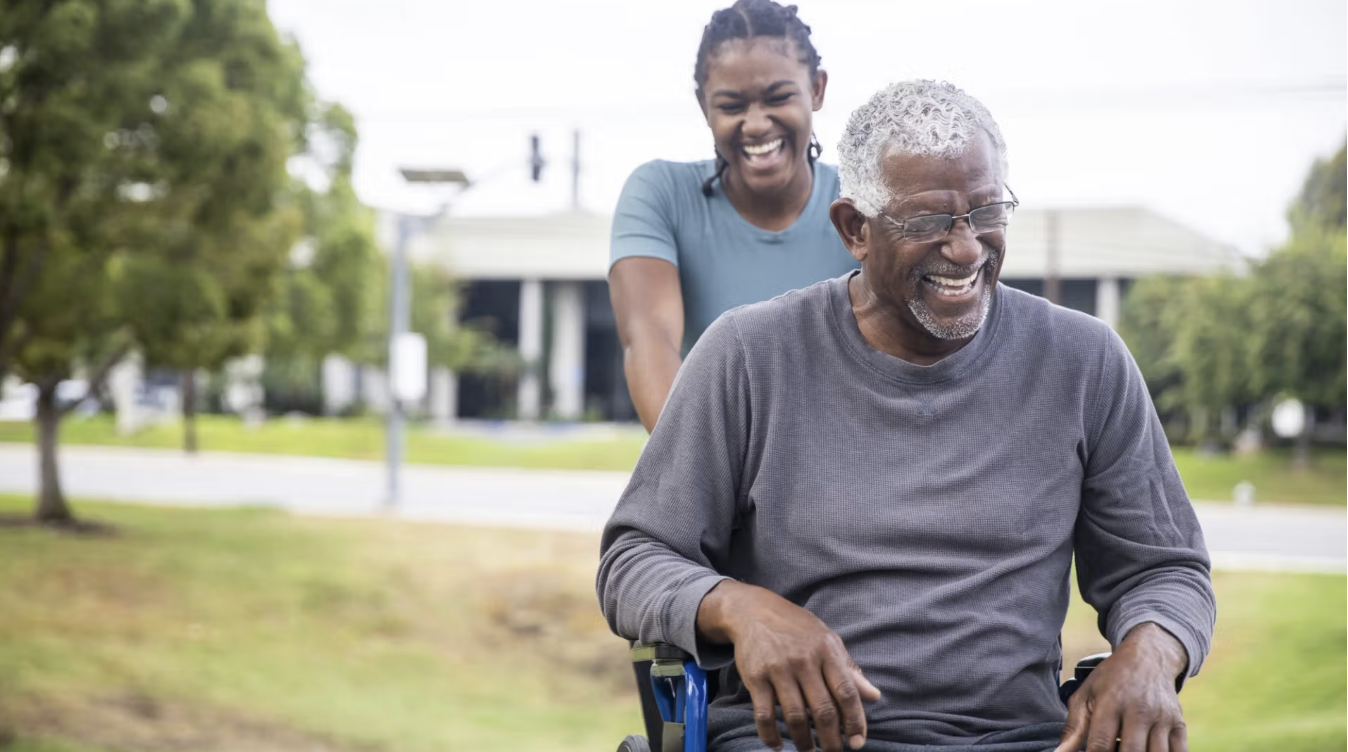
Caregivers become terribly efficient. Meals, medications, laundry, doctors, cleaning, appointments, prescriptions. Life turns into one enormous checklist.
Pleasure gets postponed until “things settle down.”
They may never settle down.
So pleasure has to become an appointment too. Lunch with a friend next Wednesday. A movie Saturday afternoon. A massage. A concert next month. Sunday breakfast somewhere beautiful.
There is something psychologically powerful about having a pleasurable event ahead of you. A caregiver needs things on the calendar that are not connected with illness.
-
Refuse unnecessary perfection
This is a huge thief of caregiver energy.
The house doesn’t have to be immaculate. Every meal doesn’t have to be freshly cooked. Every visitor doesn’t need entertaining. Every minor discomfort doesn’t require immediate intervention. And sometimes frozen lasagna is not evidence of moral collapse.
Ask repeatedly:
“Does this actually need doing?”
Then:
“Does it need doing by me?”
Those two questions can liberate hours.
Caregiving should operate on the principle of “good enough”, not domestic sainthood!
-
Protect the relationship from becoming purely clinical
This is especially important when caring for a spouse.
Gradually the relationship can become nurse and patient rather than husband and wife, partners, lovers, siblings or friends. Every conversation becomes: Did you take your tablets? Have you eaten? How is the pain? When did you last go to the bathroom?
Illness takes over the relationship.
Deliberately create moments in which illness is banned from the conversation. Watch an old comedy together. Look through photographs. Gossip outrageously. Play cards. Listen to music from when you were young. Talk about people you both knew.
Try occasionally to meet person to person rather than caregiver to patient.
Both people need that.
-
Maintain a life outside the illness
Caregiving shrinks one’s world. Friends disappear—not necessarily through indifference, but because invitations repeatedly get declined. Hobbies disappear. Travel disappears. Eventually the caregiver can lose contact with the person they were before the illness arrived.
Fight that contraction deliberately.
Keep friendships alive. Keep one hobby going. Keep learning something. Go somewhere new occasionally. Maintain conversations with people who don’t begin by asking, “How is he?” or “How is she?”
And when somebody asks the caregiver how they are, they should be allowed to answer truthfully.
The patient has an illness. The caregiver does not have to become part of the illness.
-
Give yourself permission to enjoy being alive
This may be the deepest one.
Caregivers sometimes experience a peculiar guilt when they enjoy themselves. How can I be laughing when she is suffering? How can I go out to dinner when he cannot? How can I possibly take a holiday?
But, honestly, the suffering of one person is not reduced by requiring another person to suffer alongside them.
In fact, quite the reverse. A caregiver who sleeps, laughs, socializes, exercises, sees daylight, experiences affection and occasionally has a thoroughly wonderful time comes back with more emotional resources to give.
Joy is not a betrayal of the person you care for. Joy is part of what keeps you capable of caring.
That might actually be the central thought of this piece. We speak endlessly about care for the patient, but perhaps we need to enlarge the concept. The caregiver is part of the care system too. If that person becomes exhausted, anxious, resentful, isolated and joyless, the entire system begins to fail.
The goal therefore isn’t merely to help caregivers “cope.”
It’s to make sure that, while looking after somebody else’s life, they don’t accidentally surrender their own.
 God bless you, Dolly! You were a blazing light!
To Your Good Health,
Prof. Keith Scott-Mumby
The Official Alternative Doctor
Data Source:
AARP and National Alliance for Caregiving. Caregiving in the US 2025. Washington, DC: AARP. July 24, 2025. https://doi.org/10.26419/ppi.00373.001