Avoiding all dogma, myth and cant, relying only on scientific observations, what can we say?
Quite a lot really. It all depends on your model of consciousness. If it really is true that we are a non-material, aware entity, there are certain things that MUST be true, by definition.
For example non-material means no matter, energy, space or time (those are material characteristics). Take just a couple of points and think it through, with logic, not superstition or religious guff… No time means no beginning and no end. No end means you can’t go away. You’re here (or somewhere) FOREVER!
That means you can’t die or vanish. You cannot UN-be!
No space means (in effect) you are all-space. You fill up everything, to the very ends of the universe and beyond. That reminds me of a lovely witty remark I like to quote by English writer G K Chesteron: the Cosmos is just about the smallest hole into which you can cram a human mind.
[Actually, to be very accurate, this is the actual quote: Chesterton, G. K. (1908). Orthodoxy. London: John Lane. Chapter II, “The Maniac.” “The earth is so very large, and the cosmos is so very small. The cosmos is about the smallest hole that a man can hide his head in.”]
You should give yourself points; billions, trillions of points, just for being you. Your mind can reach out to the edges of the universe. Therefore your mind is as BIG as the universe! Forget all that hoo-ha about the meek inheriting the earth. Anyone with intellectual balls enough can inherit the entire Cosmos!
So what? Well, if we don’t go away or vanish at death, what happens? For the feeble reductionist scientists, it’s not a problem. Everything is matter (stuff), there is no life, no living essence. When the chemicals pack up, we’re done. All gone.
Of course they can’t prove that childish dogma, by the very nature of their position. It’s forever unprovable and as Sir Karl Popper would point out, it’s not a falsifiable position, therefore it is not science.
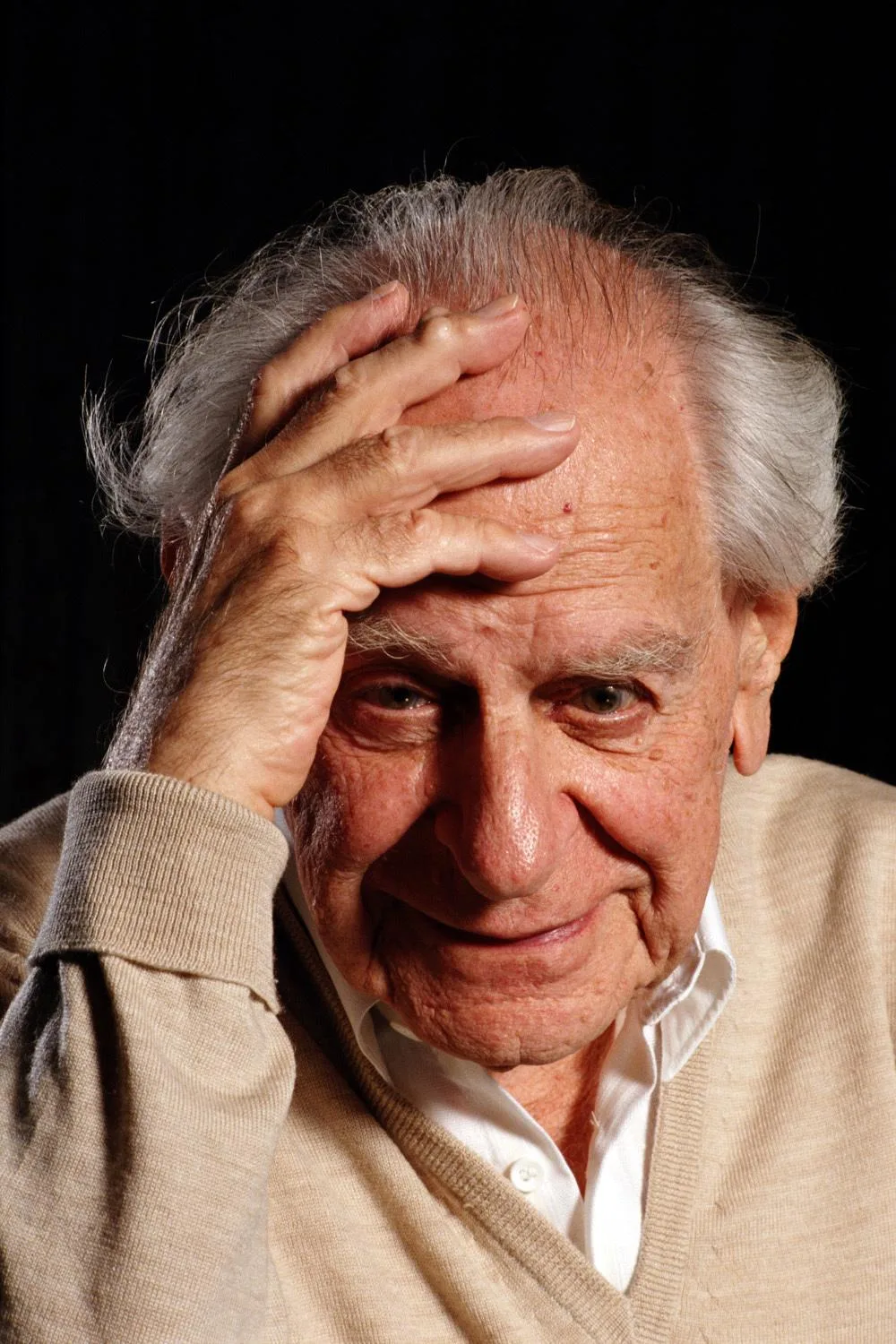 Sir Karl Popper. One of the 20th century’s most influential philosophers of science
But we can prove the opposite. There is life beyond death. The evidence is abundant. So how do the reductionists rationalize that? They don’t. They just claim all evidence is fake or a delusion. It MUST BE FAKE is their position, because there is no life essence, so proofs there is cannot exist.
As I said, very childish.
They should know better really, because science says that we must survive beyond death in some capacity of other. It’s advanced physics. Matter and energy (same thing) cannot be created or destroyed. We leave some impression behind; something of our energies survive; information won’t go away or unexist; there’s “essence of us” out there in reality; we leave a mark. Fact.
But I don’t want to trivialize this. Let the low-grade loonies get on with their denials. What REALLY happens when we die; I mean what happens to our consciousness? One minute we’re alive and maybe talking; next minute we’re down; gone. But are we really no more?
The phenomenon of death is something that concerns only our physical form. We stop breathing; the heart quits; chemicals max out; and then the body doesn’t do much.
But even that is not simple, as so many cases of recovery of individuals pronounced deader than dead prove. It’s getting harder and harder for doctors to truly identify the moment of actual death. Flat lining (no more heart electrical signals) does not mean recovery isn’t possible. Not breathing or having no oxygen for even quite substantial periods is still recoverable.
People in a supposed “brain dead” coma can and do wake up and are normal!
I covered this topic in some detail last week, concentrating on just the physical facts.
https://alternative-doctor.com/safe-and-effective-you-gotta-be-kidding/
What Happens to The Me?
The real question posed by my title is what happens to the thinking, aware entity at the moment of death? With the body gone, it means that person will no longer be able to communicate to us. But does that mean he or she is no longer there?
If you were to die tomorrow, what would you likely experience?
These are big questions and you may prefer to ignore them: “We’ll never really know, so what’s the point of worrying?” It’s a position. Many hold it.
But reports and clues are littered around everywhere, telling us what to expect.
What it is not: there are writers with opinions, not based on any facts, but just quoting somebody else out there who spins stories. One of the daftest is that you will go into another world, just like this one and not even know you’ve died for a time. There will be paths and walls and windows and furniture that will all look familiar to you.
Emanuel Swedenborg, writing in the eighteenth century, described this daffy spiritual world in which people initially find themselves in familiar surroundings, living in houses and communities remarkably like those they left behind. It apparently never occurred to Swedenborg he was just hallucinating. His idea was just a dream.
Later Spiritualist writers, particularly Andrew Jackson Davis, expanded this into the idea of “Summerland,” where souls inhabit beautiful homes and landscapes that often resemble an idealized earthly existence.
But pause for a moment and think it through. If your favorite armchair appears in heaven, who made it? If a hundred-year-old oak dining table accompanies you, does the carpenter who crafted it arrive there too? What of the trees that became the timber? What about the bricks, wallpaper, carpets, teaspoons, motor cars and pianos? Do material objects possess immortal souls alongside their owners?
The concept quickly becomes philosophically awkward. It seems to require an endless duplication of the physical universe, with every manufactured object somehow translated into eternity. Yet if all these things are merely symbolic or thought-created, then they are no longer really the original objects at all, but expressions of consciousness.
Interestingly, even Swedenborg himself did not quite describe heaven as a warehouse of earthly possessions. Rather, he suggested that the houses and surroundings correspond to a person’s inner spiritual state and, in a sense, arise from consciousness itself rather than from transported matter.
[https://swedenborg.com/emanuel-swedenborg/explore/spiritual-world/]
For me, that distinction is crucial. If consciousness survives death, it makes far more sense that any environment experienced there would be created by mind, not by hauling sofas and sideboards across the boundary between worlds!
For me this everything-as-it-was story is for wimps and pattycakes. We are better than that, surely?
Same Goes For Angels
In his book Heaven and Hell, Swedenborg says that he was allowed to experience the process of dying and being awakened in the spiritual world so that he could tell people on earth what it was like. He describes how angels sat beside him, unseen by most because angels are in the spiritual world. These angels stayed with him throughout the entire transition, surrounding him with loving thoughts.
I always laugh at portrayals of angels. Just think of the MASSIVE chest muscles it would take to flap those wings! (think turkey breast meat). Yes, it is laughable. All the angels I encountered or know of didn’t need wings, any more than they needed hands and feet.
Yes, there may be supernatural beings present at death, but are they essential? I don’t think so.
So Where Does That Leave Us?
I think the best clues to life after death come from NDE’s, or near death experiences. These are remarkably consistent among people who have drowned or had a heart attack and survived. You’ve probably read accounts: the tunnel, being drawn towards the light, radiant bliss when you get to whatever is there, loving beings waiting for you… Accounts are remarkably consistent and that carries some scientific clout.
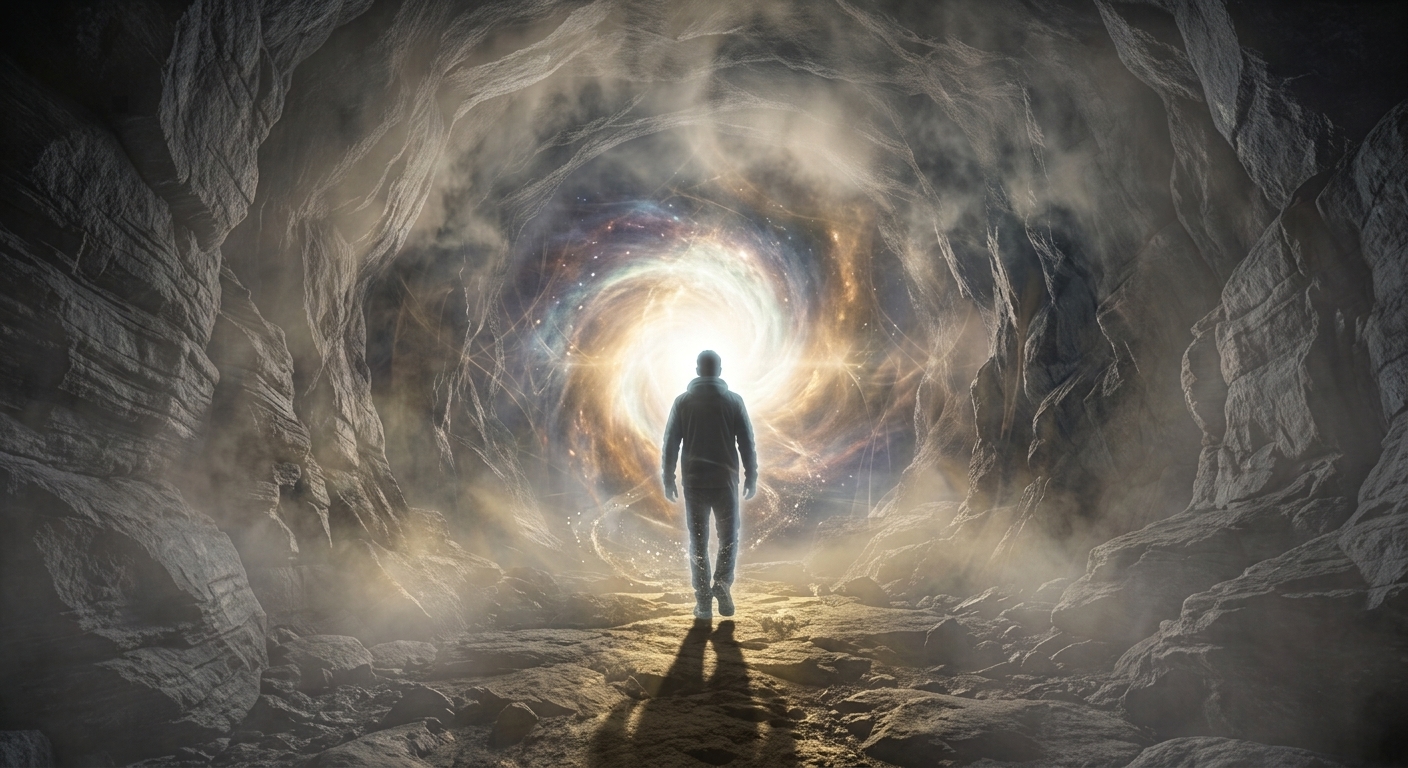 If people are just hallucinating, how come these visions are so consistently similar? Millions of people all having the same hallucination? Nah, I don’t think so, though that’s what reductionist scientists try to fob us off with.
Anita Moorjani’s marvelous account of dying in her book Dying To Be Me talks of God in life-after-death being a state, rather than a person. That’s entirely consistent with my own experience and knowing, which I have described at length in my best-selling book New God New World.
I’ll revisit this theme from time to time, because a physician walks a line very close to death. It’s part of the job description that you have to help others step “over the line”. When the person has gone, I know I’ll likely never see them again, though family and friends sometimes get visited by specters at the moment of death.
But at least I know I’ve done a good job, when I help him or her make the transition wisely and lovingly.
Well, LOTS more to write and say about that. I hope this is “food for thought” and more than just a tasty spiritual snack!
To your health,
Prof. Keith Scott-Mumby
The Official Alternative Doctor