
I started my 9th decade (80s) not long ago. You’ll likely live longer if you have a reason to!
I’ve said this often in my writings: that purpose (meaning) in life and belonging (social connection) are worth decades of extra living. In the reverse, if your life has no purpose or meaning, it’s not (or hardly) worth living anyway and people lacking these attributes do tend to die measurably sooner.
Now I don’t mean extension of life while troubled by sickness and disabilities. I’m talking about joyful, vibrant and zestful living, in vigorous full health, or close to full health.
That’s a standard not even acknowledged by modern industrial-scale medicine. Their self-serving definition of “health” is free of some symptom or other. What’s great for them is that you get tricked into accepting a symptom solution. But it never solves the cause, only masks the symptom. It’s a perfect business model for them because you go on paying for that masking effect for the rest of your life.

Now I’m very serious about this. Let’s take purpose first. Your purpose defines the meaning in your life; the WHY you are here and what it is you want to accomplish. Maybe you’ve never thought about this much but as the years lengthen, you need to focus more and more on what it is you should be doing.
The scientific facts are irrefutable: a recent (July 2026) huge meta-analytic study of nearly half a million subjects from the United States, Europe, and Asia, over a period of 32 years follow-up, showed those with a strong sense of purpose had around a 30% less mortality, that is death due to all causes.
[[Psychological Medicine , Volume 56 , 2026 , e214]
Now if that isn’t a new scripture, I don’t know what is! Forget obedience and reverence for the Old God; that’s not worth a nickel in terms of longevity and health. For real meaning, it comes down to your own values; not some clunky interpretations of how you are supposed to live by priests and gatekeepers, heavily enforced by threats of Hell and damnation.
So breathe easy!
My New God, as described in my bestselling book New God New World, blesses you with extra years of health and vitality, if you get it right. Much better than punishment for getting it wrong!
There is already substantial literature that links purpose in life to healthier behaviors and better health outcomes. Individuals higher in purpose in life, for example, tend to engage in more physical activity, are less likely to smoke or use other substances, and more likely to get preventative cancer screenings. Perhaps as a result, such individuals are also less likely to have chronic disease, including cardiovascular disease, diabetes, Parkinson’s disease, or dementia.
In a nutshell, individuals higher in purpose in life have longer health spans and lower risk of mortality. These days we like to keep these two measures as close as possible. Lifespan is how you long you live but “healthspan” is how many of those years are useful and disease-free!
My saying that: we Boomers want to party till our last day on earth sums it all up in a memorable trope. 100% healthspan!
So what about belonging? In fact what do we mean by “belonging”? It’s that sense of being surrounded by people like us, who process the world in the same way, and among whom we are valued as an individual. Usually we know each others names and live in the same neighborhood. We share values and calendar dates.
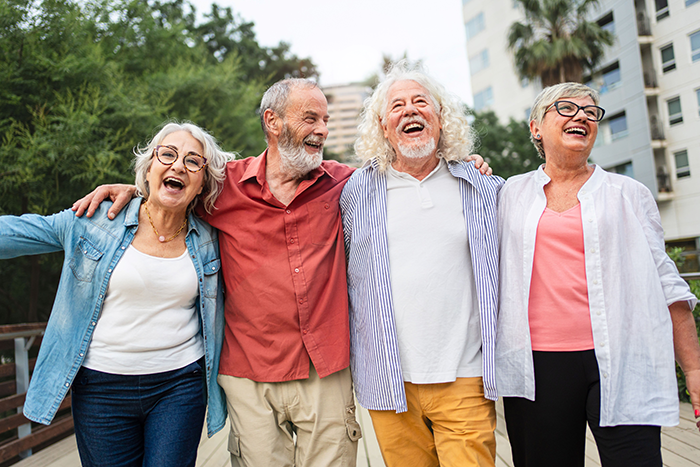
What is often studied is religious community and I don’t accept that as enough. It doesn’t tell us whether spiritual beliefs are important, or just the sense of belonging. But there are interesting facts to be gleaned.
Religious attendance is associated with U.S. adult mortality in a tiered fashion: People who never attend exhibit 1.87 times the risk of death in the follow-up period (nearly double) compared with people who attend more than once a week. This translates into a seven-year difference in life expectancy at age 20 between those who never attend and those who attend more than once a week.
Again, I emphasize that spirituality and religion are not the same thing. But I do recognize the shaky connection that most people hold: they think being religious is the same, or as good as, spirituality. Suffice it to say, it comprises the relationship with the sacred and the search for the transcendent, in addition to the personal search for existential issues related to the end of life, to its meaning, which may or may not lead to the development of religious practices or be linked to organized religion.
[Koenig et al., 2012;Lucchetti et al., 2010]
But there’s something rather important hiding inside these statistics. What if the health benefits attributed to religion are not really about religion at all?
What if much of the benefit comes from belonging?
Think about the traditional church community. You don’t merely turn up to hear a sermon. People know your name. They notice when you aren’t there. They ask how you are. They know your husband, wife, children and grandchildren. They may visit you when you are sick. There are dinners, coffee mornings, choirs, charity events, celebrations, funerals and weddings. There is a rhythm of human connection.
You matter to somebody.
That last sentence is enormous.
One of the most damaging experiences a human being can have is the feeling that nobody would particularly notice if you disappeared. It doesn’t have to be dramatic loneliness. You can be surrounded by people and still feel profoundly disconnected. Conversely, you can live alone and yet feel wonderfully connected because you have friends, causes, groups, correspondence, projects and people who are delighted to hear from you.
Belonging is not the same thing as merely having people around.
It is the feeling that I have a place here.
I think this becomes increasingly important as we grow older because society has a nasty habit of gradually removing our roles. You retire and suddenly you are no longer the doctor, teacher, businessman, engineer, secretary or whatever identity carried you through much of adult life. Children grow up. They have their own families. You’re not quite the parent any more. Friends move away. Some die. The world begins, rather rudely, to suggest that perhaps your principal occupation now should be growing old.
Rubbish!
This is exactly when we should be constructing new roles.
We should be asking: Who needs me? What excites me? What am I learning? What am I contributing? Who are my people? What can I still create?
Especially that last one.
Human beings are creators. We make gardens, businesses, friendships, books, meals, jokes, families, music, inventions, communities and sometimes glorious trouble. Creation gives consciousness somewhere to go.
Retirement should never mean retirement from purpose.
Indeed, I think one of the greatest mistakes in our culture is the idea that the objective of working life is eventually to reach a point where we have nothing to do. People fantasize about endless leisure. But endless leisure can become remarkably empty. A holiday is wonderful partly because it is a holiday from something. Make the holiday permanent and by about Thursday afternoon you may begin wondering what you are supposed to do with yourself!
Purpose needn’t be grand. It doesn’t mean you need to save humanity, discover a new planet or write War and Peace.
Purpose can be wonderfully modest.
Growing the best tomatoes in Nevada can be purpose. Teaching your granddaughter to cook can be purpose. Caring for animals can be purpose. Joining a singing group can be purpose. Writing your memories can be purpose. Helping someone who is struggling can be purpose. Learning Italian at 82 can certainly be purpose, especially if you have the additional incentive of planning to flirt outrageously in Rome!
The scale doesn’t matter. The aliveness does.
Purpose means tomorrow contains something that matters.
And this is where purpose and belonging join hands. Very often our strongest purposes involve other people. We teach, help, encourage, build, entertain, comfort, organize, share and love. Purpose draws us outward and connection feeds something back.
That reciprocal flow may be one of the most powerful health tonics available to us.
We already know that social isolation and loneliness are associated with increased risks of cardiovascular disease, cognitive decline, depression and premature mortality. The magnitude is large enough that loneliness is no longer something medicine can dismiss as merely an unfortunate emotional state. Social connection belongs in the health conversation alongside exercise, nutrition, sleep and the rest.
But I want to go further than simply saying, “Don’t be lonely.” We need to create belonging deliberately.
That may mean joining something. Better still, it may mean starting something.
If you cannot find your tribe, build one!
Invite six interesting people to supper once a month. Start a walking group. Form a discussion circle. Volunteer somewhere. Join a choir. Start painting with others. Find people who share your spiritual interests. Teach something you know. Learn something you don’t know.
And please don’t make the mistake of thinking friendship is something that just happens spontaneously when we are young and therefore cannot be created later in life. Friendship is partly an activity, not a passive happening. It needs tending. Somebody has to make the phone call. Somebody has to suggest lunch. Somebody has to say, “Come over Thursday.”
Why shouldn’t that somebody be you?
You don’t need identical beliefs to belong. You need mutual recognition and connecting values. Is all!
And I suspect this brings us close to the real reason that purpose and belonging affect longevity. They tell the organism that life is still happening.
There are people to love. There are things to do. There are surprises still waiting. There is something worth getting up for tomorrow morning.
The body hears that message.
I don’t mean this merely as a metaphor. Psychology and physiology are not two entirely separate kingdoms. Our emotional lives influence sleep, inflammation, hormonal signaling, immune function, cardiovascular physiology, health behaviors and innumerable other processes. A life of engagement produces a very different biological environment from a life of chronic isolation, helplessness and despair.
So perhaps we have been looking at longevity from the wrong end.
We obsess about what we should remove. Don’t smoke. Don’t drink too much. Don’t eat this. Don’t eat that. Reduce your cholesterol. Reduce your blood pressure. Reduce your weight.
Medicine loves subtraction. But perhaps longevity also requires addition.
• Add friendship.
• Add laughter.
• Add curiosity.
• Add usefulness.
• Add something you are looking forward to.
• Add people who are pleased when you walk through the door.
• Add a reason to get out of bed.
• And above all, add love.
This fits perfectly with my conception of the New God. I don’t see the Divine as some celestial accountant awarding bonus years because we have behaved ourselves. That takes us straight back to the old reward-and-punishment religious model that has failed dismally.
I see it much more naturally. Life flourishes when we participate in it. Consciousness seems to expand through relationship, creation, curiosity, service, pleasure, affection and meaning. We become more alive by being more alive.
We should probably stop using the expression “anti-aging.” Why should we be anti anything? Let’s just be pro-living! If that happens to produce extra years, excellent. I’ll take them!
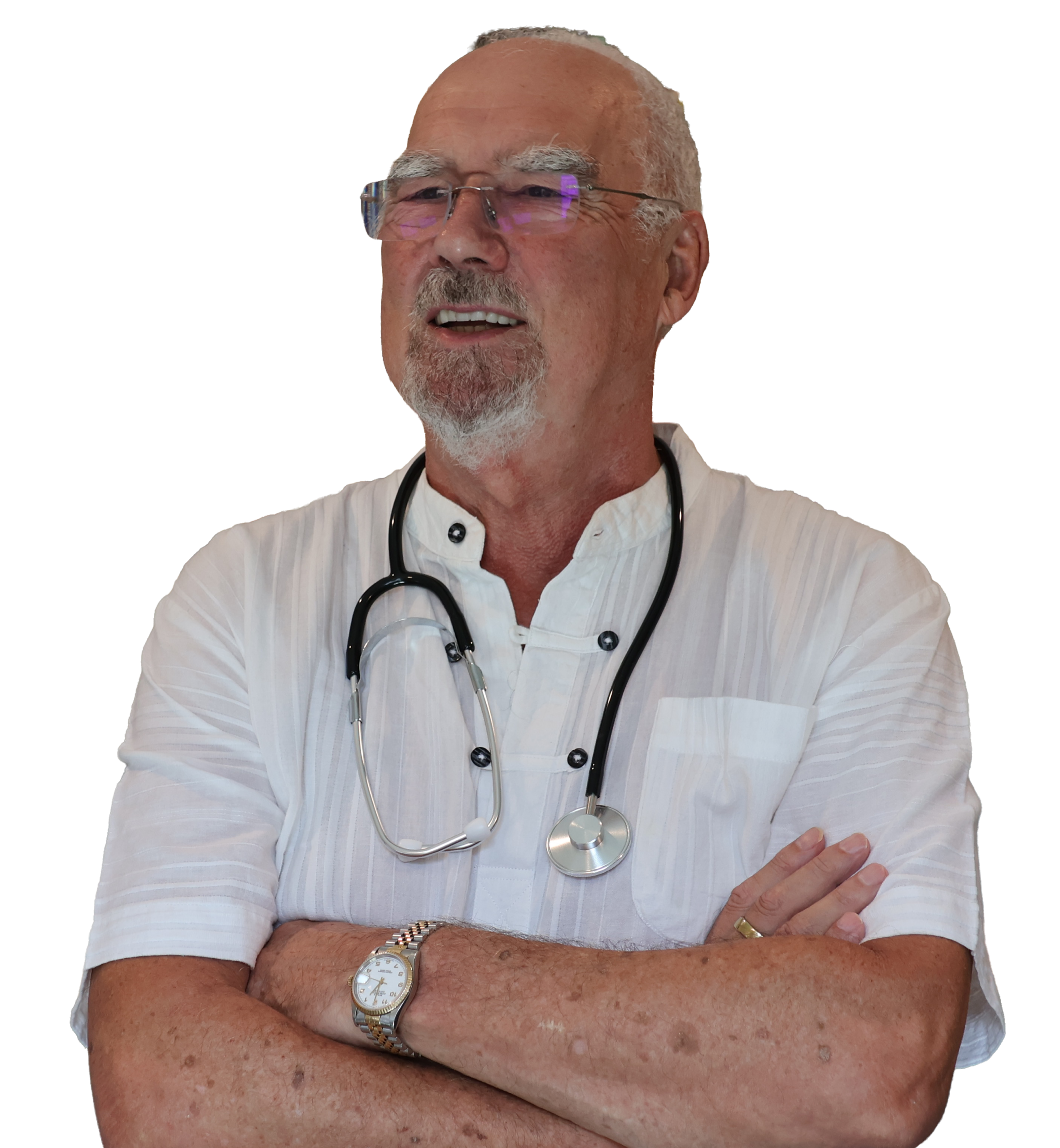 Just been experimenting with some new portraits!
So Ask Yourself
What am I here for now? and Who are my people? If you have good answers to both, treasure them.
If you don’t, then perhaps you have just discovered your next great adventure. Because purpose is not something you have to find buried somewhere inside yourself, like a lost set of car keys. You can choose it. And belonging is not merely somewhere you arrive. You can create it.
Do those two things and you are no longer merely attempting to live longer. You are giving Mother Nature a very good reason to keep you around. And THAT is my kind of longevity medicine.
To your good health, Prof. Keith Scott-Mumby
The Alternative Doctor